Downs & possession
What is a turnover in football?
The takeaway
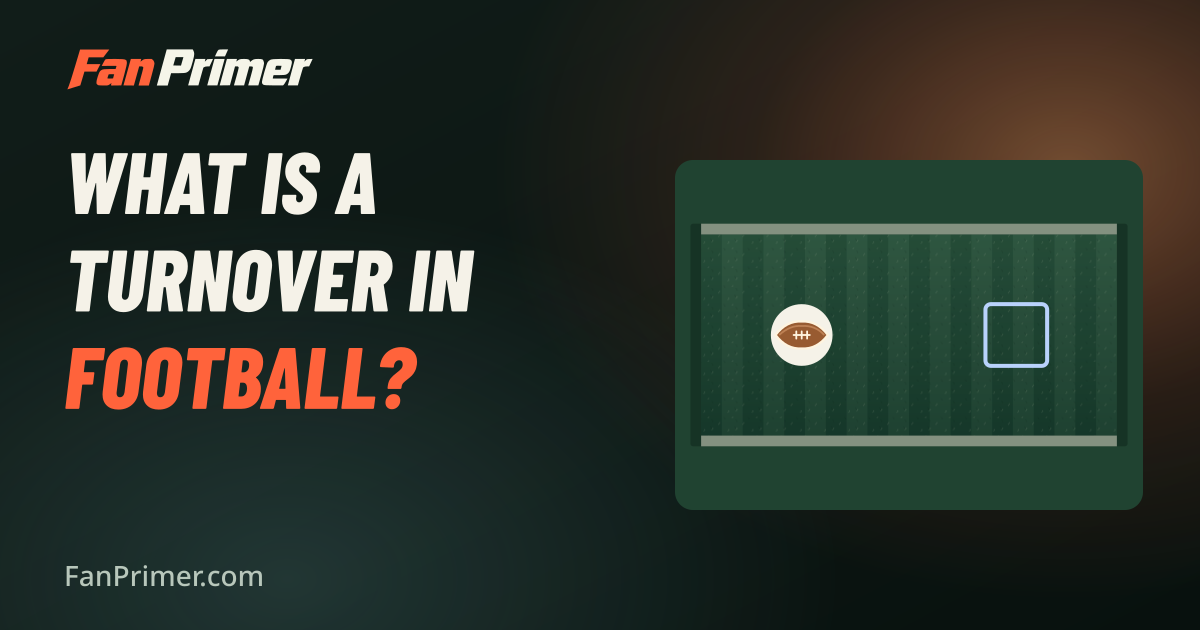
A turnover suddenly gives the other team the ball. It can happen when a defender catches a pass or picks up a ball your team dropped.
See how it works
Before the loss
A’s runner possesses the ball.
The ball comes loose
Neither team controls it yet. The recovery decides possession.
Team A recovers
Team A keeps possession in this ordinary example. No turnover.
Team B recovers
Team B gets possession. This is a lost fumble and a turnover.
An interception catches the opponent’s pass
Team B catches A’s pass. A return can continue toward the other goal; the catch alone does not always end the play.
Dropping the ball does not always lose it
A fumble means losing control after possessing the ball, other than by passing, handing it off successfully or legally kicking. Your team may pick up its own fumble and keep possession. If the opponent recovers it, possession changes. An ordinary forward pass that hits the ground uncaught is different: that ends the play.
The defender may keep running
A defender who catches the opponent’s pass or recovers a fumble can often run toward the other end zone. The teams switch jobs during the play: the new ball carrier attacks and his teammates can block. A return may even score a touchdown.
Not every change appears in the turnover total
Using 4th down without reaching the target gives the opponent the ball when the play ends. That is a turnover on downs. The turnover number on TV normally counts interceptions and lost fumbles, with turnover on downs tracked separately. A punt deliberately gives up possession and normally is not counted as a turnover.