Downs & possession
Why can a fumble through the end zone give the other team the ball?
The takeaway
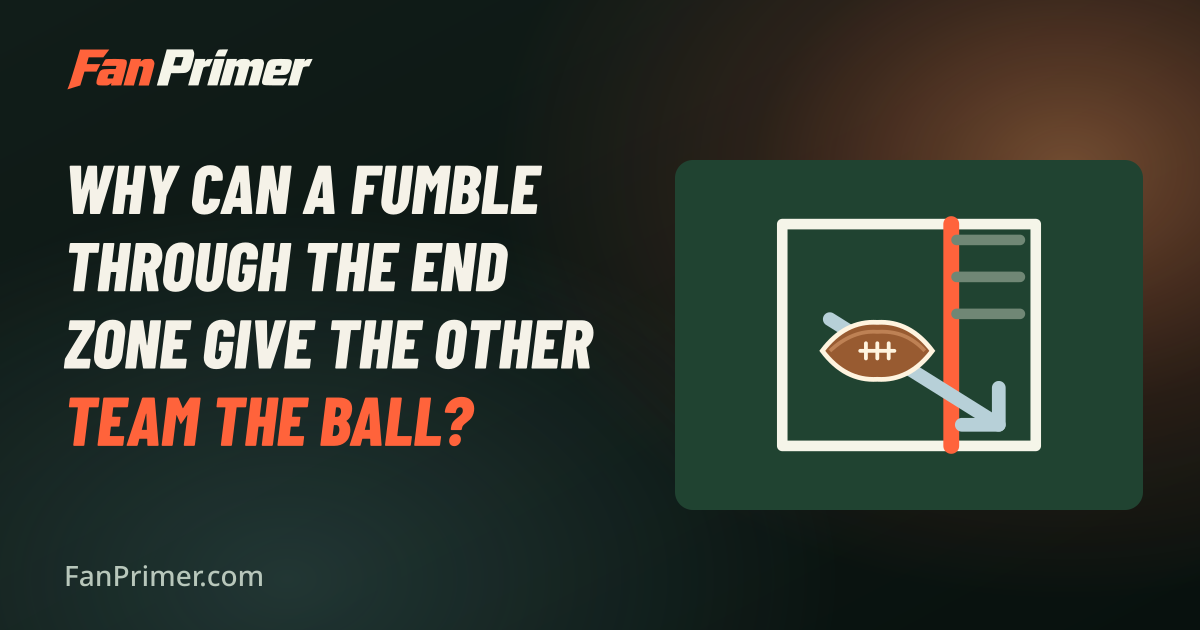
A ball fumbled forward out through the opponent’s end zone gives the opponent the ball. Fumbling forward out at the sideline usually lets your team keep it.
See how it works
A forward fumble exits the sideline at the 1 in one case and exits through the opponent’s end zone in the other.
Out at the sideline
Forward fumble: return to the 2-yard fumble spot.
Out through the end zone
Touchback: defense takes over at its own 20.
Out at the sideline
Forward fumble: return to the 2-yard fumble spot.
Out through the end zone
Touchback: defense takes over at its own 20.
Out at the sideline
Forward fumble: return to the 2-yard fumble spot.
Out through the end zone
Touchback: defense takes over at its own 20.
Out at the sideline
Forward fumble: return to the 2-yard fumble spot.
Out through the end zone
Touchback: defense takes over at its own 20.
Out at the sideline
Forward fumble: return to the 2-yard fumble spot.
Out through the end zone
Touchback: defense takes over at its own 20.
A loose ball crossing the goal line is not enough
A runner needs possession when the ball reaches the opponent’s goal line to score. If he drops it at the 2-yard line and it rolls into the end zone, he has not carried it across with control.
Where the ball leaves changes who gets it
In the sideline picture, the dropped ball rolls forward and out at the 1. The original team keeps it at the 2, where it was dropped. In the end-zone picture, it rolls out beyond the goal line. The other team gets the ball at its own 20. That result is called a touchback.
Picking it up inside the field is different
If the ball stays inbounds, either team may be able to recover it. A pickup in the opponent’s end zone can score a touchdown. But on 4th down or late in a half, a teammate may be unable to advance the original runner’s fumble. A ball fumbled backward out at the sideline uses the exit spot.