Penalties & rulings
What makes tripping illegal in football?
The takeaway
A player cannot use a leg or foot to obstruct an opponent, including the ball carrier. Tripping is a 15-yard foul; falling alone does not establish it.
See how it works
No leg across the runner’s path
The defender’s leg stays clear of the runner. No leg or foot is being used to obstruct him in this picture.
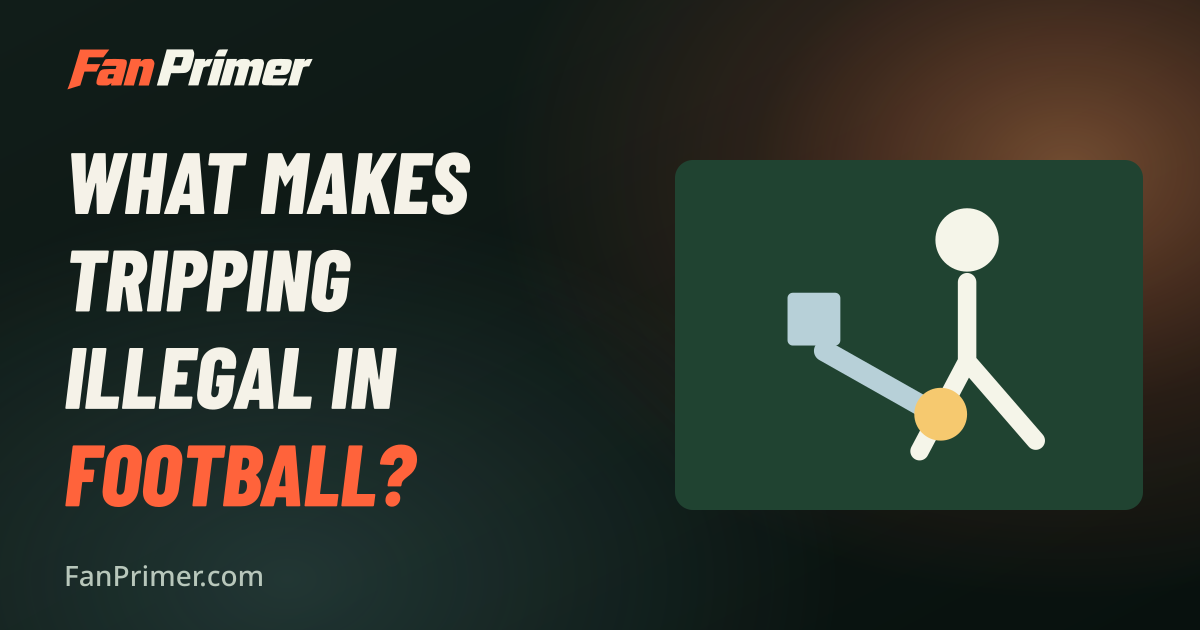
The extended leg blocks the runner
The defender extends his leg into the runner’s lower leg to obstruct his advance. This is tripping even though the opponent has the ball.
Cream R: runner · Blue D: defender · Gold ring: obstructing leg contact · Dashed arrow: runner’s path.
The leg can become an illegal barrier
A beaten defender cannot replace a missed tackle by sticking a leg into the runner’s path. Likewise, a blocker cannot use a foot to trip a defender who is getting past him. The rule applies to any opponent, so it protects both ball carriers and players without the ball.
A fall is evidence to inspect, not the definition
Players can stumble, lose balance or have feet meet while moving. To judge tripping, officials must identify the use of a leg or foot that obstructs an opponent. Look for that obstructing contact rather than judging only by the runner hitting the ground.
A legal tackle is not permission for every technique
The runner can be tackled, but that permission does not create an exception for tripping him. A conventional legal tackle and a leg used to obstruct have different mechanisms. Other rules also prohibit certain kicks, leg-whip strikes and dangerous tackle techniques.
The ordinary cost is 15 yards
Tripping carries a 15-yard penalty. If the defense commits it, the offense also receives an automatic first down. For example, a defensive trip during a run ending at the offense’s 40 can put the ball at the opponent’s 45 with a fresh set of tries. Goal-line limits, other fouls and changes of possession can alter enforcement. Flagrant conduct can lead to ejection.