Foundations
What is the difference between blocking and tackling?
The takeaway
Blocking gets in an opponent’s way. Tackling stops the player carrying the ball. A player without the ball cannot simply be grabbed and brought down.
See how it works
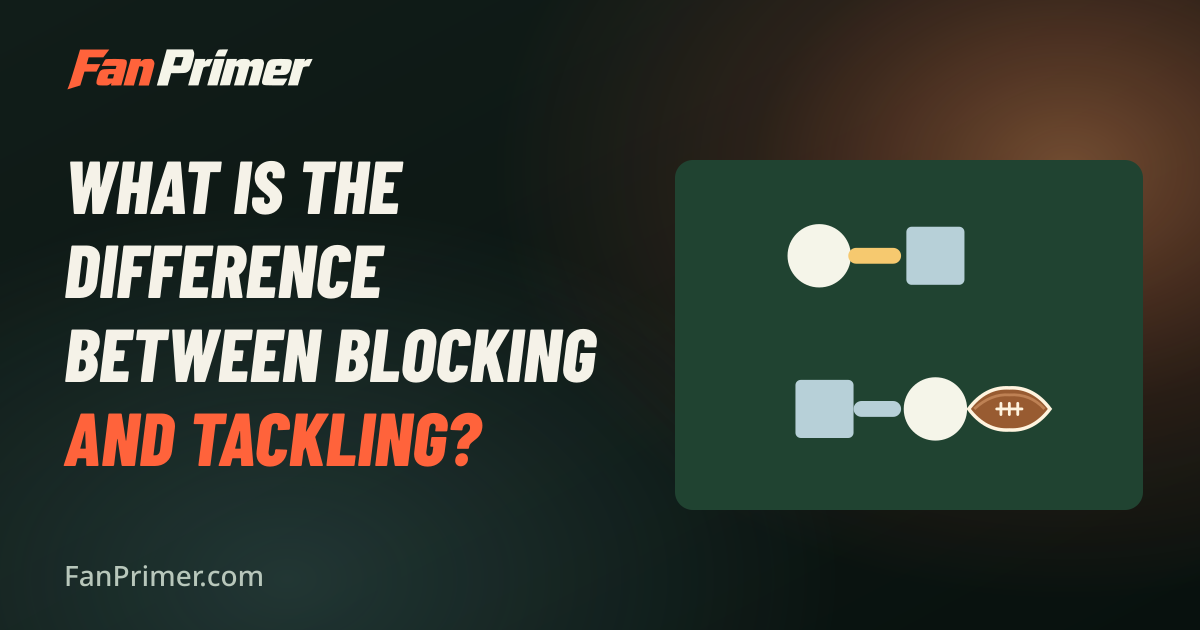
Blocker’s job
The opponent is an obstacle to the play. Legal positioning and contact can keep him away from the runner.
Tackler’s job
The player being stopped has the ball. Permitted contact can end his advance, but dangerous techniques remain illegal.
Cream R: runner with the ball · Cream B: blocker · Blue D: defender · Arrows show the intended path.
Blocking supports someone else’s action
An offensive player without the ball can use legal contact to keep a defender away from the runner or passer. A defender can also work through a blocker. The right to make contact does not include every way of grabbing, striking or pushing an opponent.
Tackling targets the ball carrier
Once a receiver catches a pass and becomes a runner, defenders can try to stop his advance with a legal tackle. Before the catch, illegally restraining him can instead be holding or pass interference, depending on the timing and other conditions.
The ball can change which action is permitted
Compare the same two players after a handoff and after a fake handoff. Tackling the actual runner can be legal. Grabbing and bringing down the teammate who never received the ball is not automatically permitted just because the defense thought he had it.
Technique and timing still matter
A ball carrier can be legally tackled without every technique being legal. A blocker also needs to obey holding, contact-location and direction rules. After the ball is dead, a new needless hit can be unnecessary roughness even if it targets the former ball carrier.