Penalties & rulings

What makes a hip-drop tackle illegal?

The takeaway

An illegal hip-drop combines a grip, a swivel that drops the tackler’s weight, and a landing on or trapping the runner’s lower leg. A fall alone is not enough.

See how it works

Follow the grip, hips and lower leg

Swivel, drop and trap
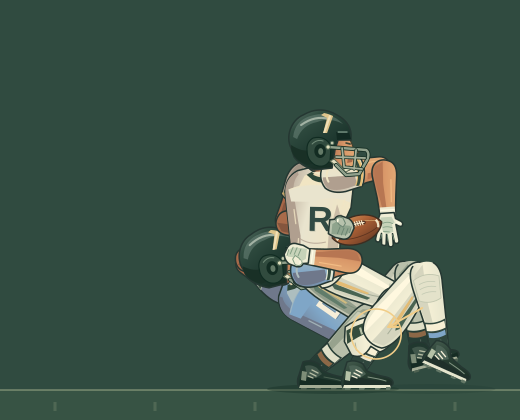
Maintaining the waist grip, the tackler unweights his feet, swivels and drops his lower body onto the runner’s leg below the knee.

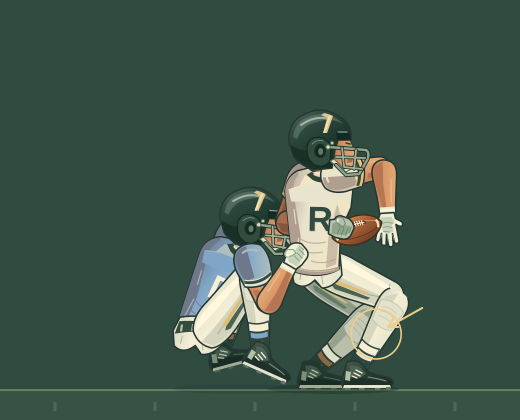
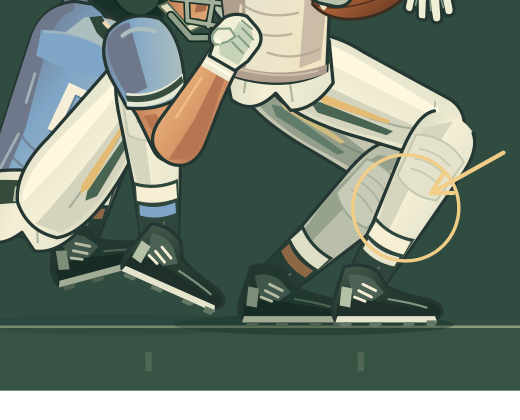
Wrap with the lower legs clear

The tackler stays beside the runner. The runner’s lower legs remain clear of his dropped body; the prohibited leg-trap sequence is absent.
3.3 / 3.6 s

The dropped lower body traps the leg in one example. The comparison keeps the lower legs clear.

Inspect the contact pictures

Swivel, drop and trap
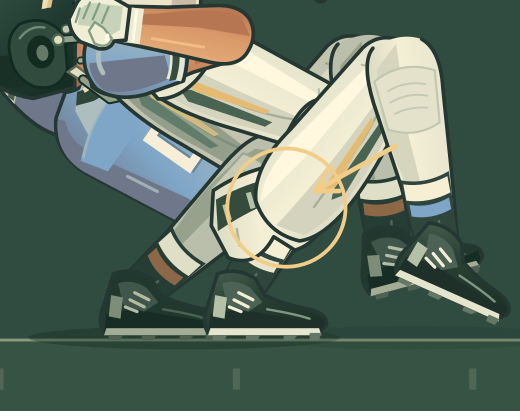
Maintaining the waist grip, the tackler unweights his feet, swivels and drops his lower body onto the runner’s leg below the knee.
Maintaining the waist grip, the tackler unweights his feet, swivels and drops his lower body onto the runner’s leg below the knee. Save picture

Wrap with the lower legs clear

The tackler stays beside the runner. The runner’s lower legs remain clear of his dropped body; the prohibited leg-trap sequence is absent.
The tackler stays beside the runner. The runner’s lower legs remain clear of his dropped body; the prohibited leg-trap sequence is absent. Save picture

Cream: offense · Blue: defender · Gold: contact or control

An illegal hip-drop combines a grip, a swivel that drops the tackler’s weight, and a landing on or trapping the runner’s lower leg. A fall alone is not enough.

Follow the grip, hips and landing

The tackler grabs with one or both hands or wraps with both arms. Keeping that contact, he swivels and drops his hips or lower body so his feet no longer support his weight. He then lands on or traps the runner’s leg at or below the knee. The whole sequence matters.

An ordinary wrap and fall may be different

Two players ending on the grass does not prove this technique. In the foul, the held runner’s lower leg is caught by the falling tackler. In the comparison it stays clear. Both actions still have to meet the other tackling rules.

Watch the replay in order

The Foxes defender grabs the Owl at the waist, swings his hips across the trailing leg, takes his own weight off the ground and drops onto that lower leg while bringing the runner down. That meets the test. Falling beside him with both lower legs clear misses the required landing or trap.

A waist grip can still lead to this foul

A horse-collar call instead concerns a prohibited high collar or nameplate grip and pull. A hip-drop can begin with an ordinary waist grip. A tackle from behind does not automatically fit either label. An accepted hip-drop penalty is 15 yards and a first down.

2026 NFL rules. The pictures separate an ordered tackle mechanism from a waist wrap without a leg trap. They do not illustrate every legal tackle or address injuries, fines or intent. Original fictional teaching examples; no real play is adjudicated. Full penalty-spot enforcement is outside this comparison.

Sources: NFL, NFL Football Operations — 2026 NFL Rulebook (Rule 12, Section 2, Articles 16 and 18)

Source edition checked October 14, 2026.

These explanations use NFL rules unless a lesson says otherwise. Examples are simplified; rules and interpretations can change, and other competitions may differ.

Share
Share

Copy this link to send it to someone:

Download landscape image