Scoring & kicking
What is the difference between muffing a punt and fumbling it?
The takeaway
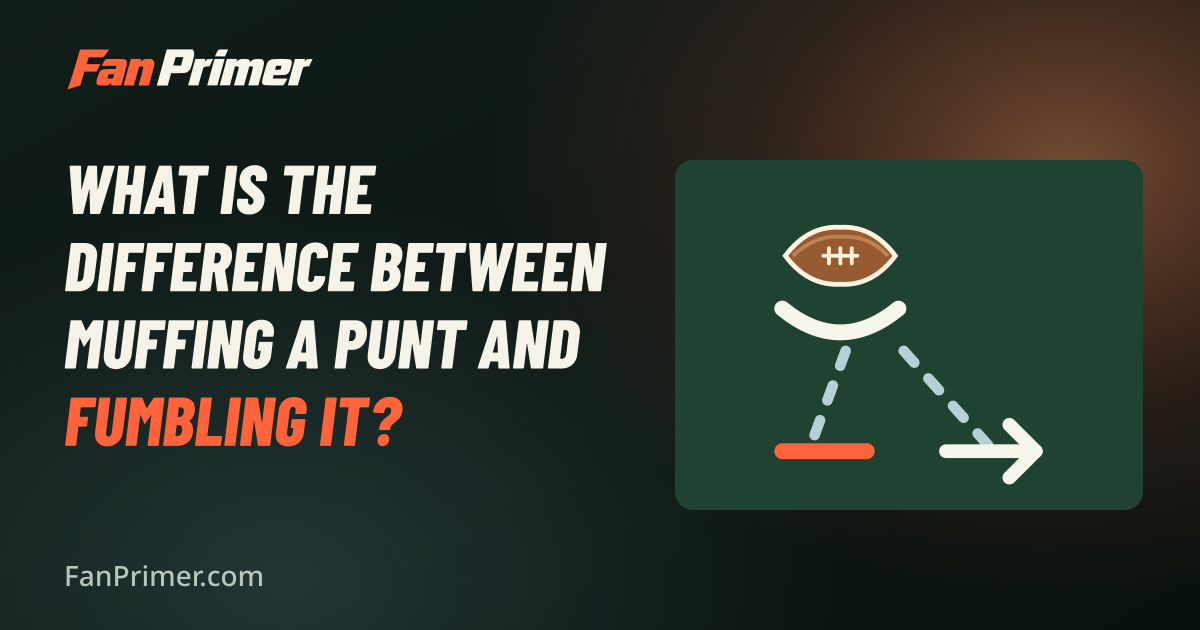
A muff means the returner touched the punt without controlling it. A fumble means he controlled it, then lost it. That changes whether the opponent can run afterward.
See how it works
A muff never becomes possession. In the fumble example, the returner possesses the ball before losing it.
Muff · never possessed
The ball is still a kick until recovered.
Fumble · possessed first
Possession ended the kick before the ball came loose.
Cream: receiving team · Blue: kicking team
Muff · never possessed
The ball is still a kick until recovered.
Fumble · possessed first
Possession ended the kick before the ball came loose.
Muff · never possessed
The ball is still a kick until recovered.
Fumble · possessed first
Possession ended the kick before the ball came loose.
Muff · never possessed
The ball is still a kick until recovered.
Fumble · possessed first
Possession ended the kick before the ball came loose.
Muff · never possessed
The ball is still a kick until recovered.
Fumble · possessed first
Possession ended the kick before the ball came loose.
A touch is not always possession
A punt bouncing off the returner’s hands can be a muff if he never controlled it. It remains a loose kick. Controlling it first ends the kick; dropping it afterward creates a fumble.
The kickers can recover a muff but cannot run it back
A receiver’s touch beyond the starting line can let the kickers keep a recovery there. That pickup ends play at its spot. They cannot pick up the muffed kick and run for a touchdown.
A fumble allows a different return
After the receiver possessed the ball, an opponent may recover his fumble and ordinarily run. Receivers can also recover their own muff and ordinarily return it, though a fair-catch signal changes that permission. Ask separately who touched it, who controlled it and who may advance.