Penalties & rulings
What is pass interference, and what contact is legal?
The takeaway
A defender cannot illegally restrict an opponent's chance to catch a catchable forward pass. The ball's timing, contact location and effect all matter.
See how it works
A free reach or a restrained arm
Catchable pass · 15 yards beyond the starting line
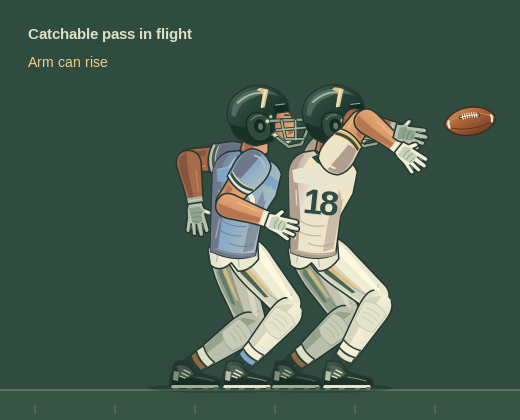
Incidental contact: arm stays free
Interference: forearm held down
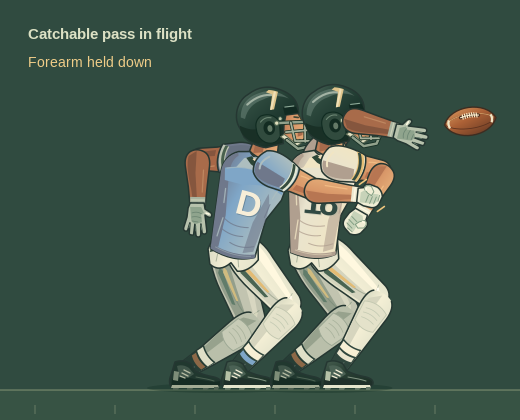
In the restricted example, the defender grips the forearm and keeps that arm below its free reach.
Inspect the contact pictures
Incidental contact: arm stays free
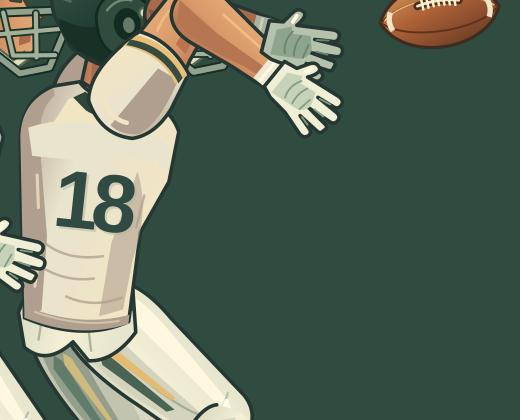
Interference: forearm held down
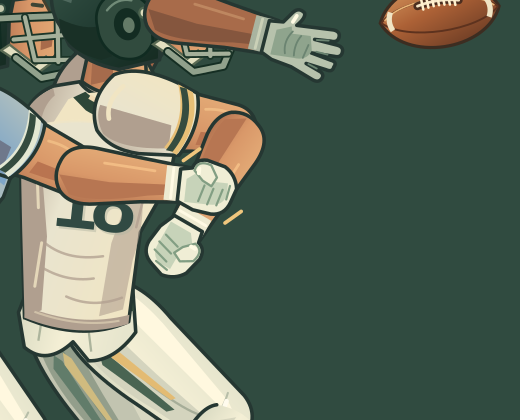
Cream: offense · Blue: defender · Gold: contact or control
Watch the catch opportunity
Defensive pass interference applies from the throw until the ball is touched, more than 1 yard beyond where the play began. The pass must be catchable. In the example, a defender restrains the receiver's arm on a 15-yard pass. The receiver does not have to drop it for that restriction to matter; incidental contact can still be legal.
Turning the head does not decide it
A defender may look back for the ball and still foul by grabbing or hitting the receiver. Failing to look back is not automatically interference either. Both players may try to catch the pass, but neither gains permission to grab or hit through the other's back.
The foul location can change the cost
Defensive pass interference generally gives the offense the ball where the foul occurred and a fresh first try. From the offense's 35, a foul at midfield can cost 15 yards; one 30 yards downfield can cost 30. A foul in the end zone commonly puts the ball at the 1-yard line, subject to the special placement rules.
Receivers can interfere too
An offensive receiver cannot create space with an illegal push or block. Offensive pass-interference restrictions start at the snap, so some blocks before the throw count. The usual penalty is 10 yards from where the play began, with the same try repeated.
Some similar-looking contact is legal
A pass no one could catch generally cannot produce pass interference, although another foul may apply. Accidental feet tangling without illegal restriction and some hand contact can be legal. Touching the pass ends the pass-interference window, but rules against illegal hits and other fouls still apply.