Penalties & rulings
What is the difference between running into and roughing the kicker?
The takeaway
Interfering with a kicker's raised kicking leg can cost 5 yards. Hitting the planted leg or making more dangerous contact can cost 15 and reset the tries.
See how it works
Same kick, different leg contact
4th & 8 at own 40 · Accept the only foul · No protection exception
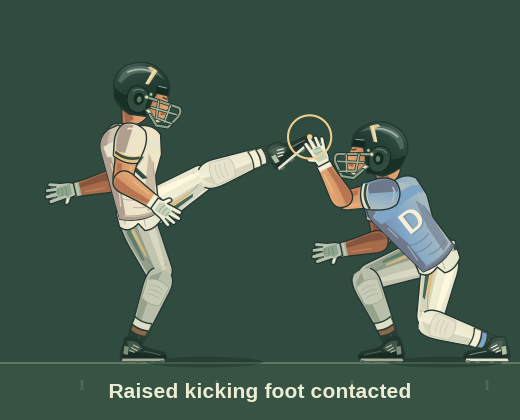
Running into: raised kicking leg
Roughing: planted support leg
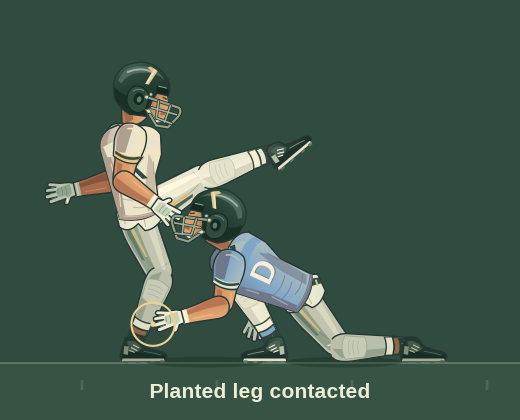
Cream: offense · Blue: defender · Gold: contact or control
After accepting 5 yards
4th & 3 · Own 45
Same down. The target at own 48 stays fixed.
After accepting 15 yards
1st & 10 · Opponent 45
New series. The kicking team keeps the ball.
Which leg was hit matters
Running into a kicker's raised kicking leg can be the 5-yard foul called running into the kicker. Hitting the leg supporting his weight can be roughing, a 15-yard foul. The kicker does not have to fall for the contact to be illegal.
The difference can decide who keeps the ball
On 4th try, needing 8, from the offense's 40, a 5-yard running-into penalty leaves 4th try, needing 3, at the 45. A 15-yard roughing penalty gives a fresh first try at the opponent's 45. On 4th try, needing only 4, even the 5-yard penalty can reach the target and earn a new set.
Other contact needs its own judgment
Sliding under the kicker and preventing both feet from returning can be running into him. Severe contact after both feet are down, or another unnecessarily rough act, can be roughing. Harmless contact after both feet return is not automatically a foul.
Touching the kick can create an exception
A defender who touches the kicked ball in flight may then make incidental contact without this foul. Being blocked so the defender changes direction into the kicker can also create an exception. Missing the ball does not provide the same excuse. The comparison assumes neither exception applies.