Foundations
What’s the difference between a run and a pass?
The takeaway
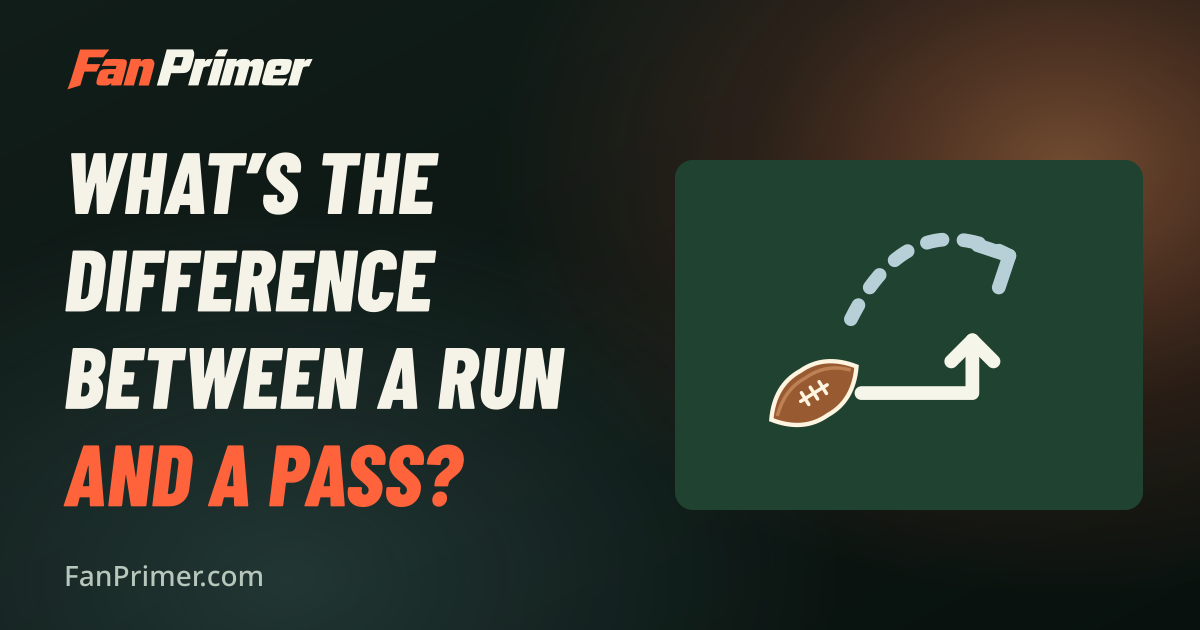
On a run, a player carries the ball. On a pass, a player throws it. A successful catch can turn a short throw into a long gain.
See how it works
Advance on the ground.
A caught pass can gain yards.
Watch how the ball leaves the quarterback
A handoff usually starts a run, and the quarterback can also keep the ball and run himself. On a forward pass, follow the throw toward the receiver. If he completes the catch, he can keep running to gain more yards.
An uncaught forward pass still uses a try
If the forward pass hits the ground uncaught, the play ends and the ball returns to where it started. On 1st try with 10 yards needed, that means 2nd try with the same 10 needed. The next play does not start where the ball landed.
Throwing farther does not guarantee gaining more
A long uncaught pass gains nothing. A short completed pass can gain a lot if the receiver runs afterward. A legal forward pass must begin behind the line of scrimmage, the line where the play started.