Offense & play design
Why does a runner step one way before running the other?
The takeaway
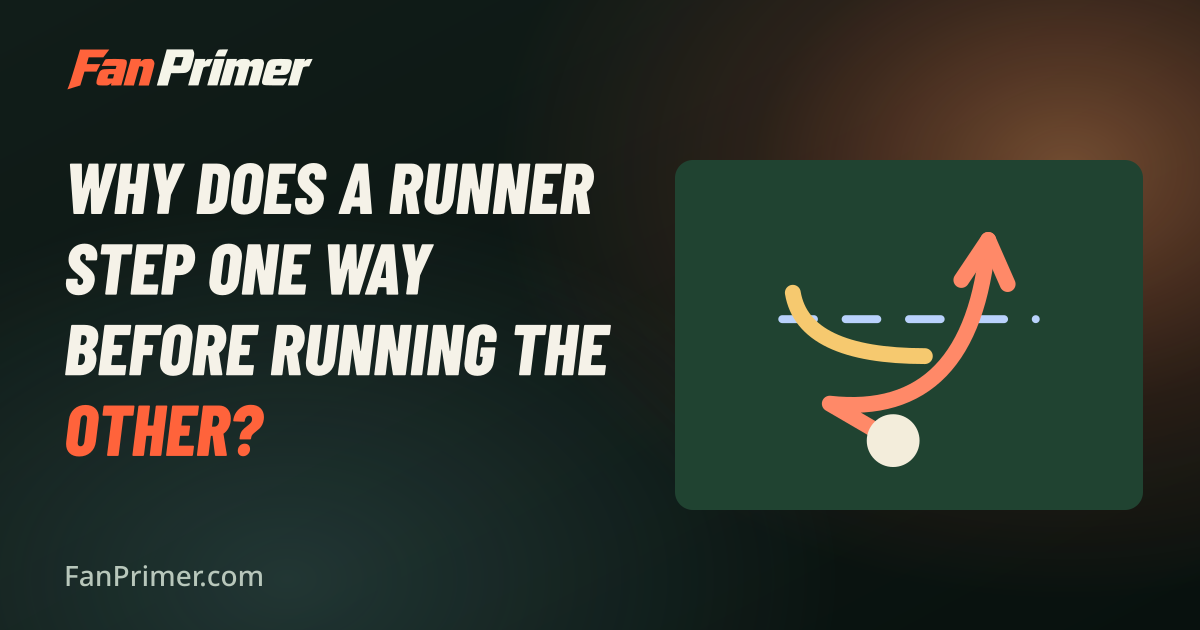
A counter run starts with a misleading step one way, then goes the other. Blockers move across to open the runner's real path.
See how it works
The back follows the tackle into the right-side lane. A defender who stays home can still close it.
Counter · left step, right-side run
G: pulling guard · T: pulling tackle · E: edge defender
Cream circles: offense · Blue squares: defense · Dashed blue: line of scrimmage · Orange: runner’s path · LB: linebacker · RB: running back · QB: quarterback
Counter · left step, right-side run
G: pulling guard · T: pulling tackle · E: edge defender
Counter · left step, right-side run
G: pulling guard · T: pulling tackle · E: edge defender
Counter · left step, right-side run
G: pulling guard · T: pulling tackle · E: edge defender
Counter · left step, right-side run
G: pulling guard · T: pulling tackle · E: edge defender
The first step can mislead a defender
The quarterback takes the snap while the running back steps left. The planned run actually goes right. If a linebacker follows that first step, he has farther to travel when the runner changes direction.
Follow the blockers moving across
Here, the left guard and tackle leave their positions and move behind the other linemen. That is called pulling. The guard blocks the outside defender. The tackle turns inside that block, and the back takes the handoff to follow them.
The fake still needs an opening
The first step helps only if the blocks arrive and the runner follows the opening. A defender who spots the crossing blockers can stay near the real path. Different counter plays use different helpers, so one moving lineman is not enough to identify every version.