Penalties & rulings
What separates a legal rub from offensive pass interference?
The takeaway
Receivers may cross paths, but they cannot illegally block a defender to free a teammate for a forward pass. Watch the contact, not the play's nickname.
See how it works
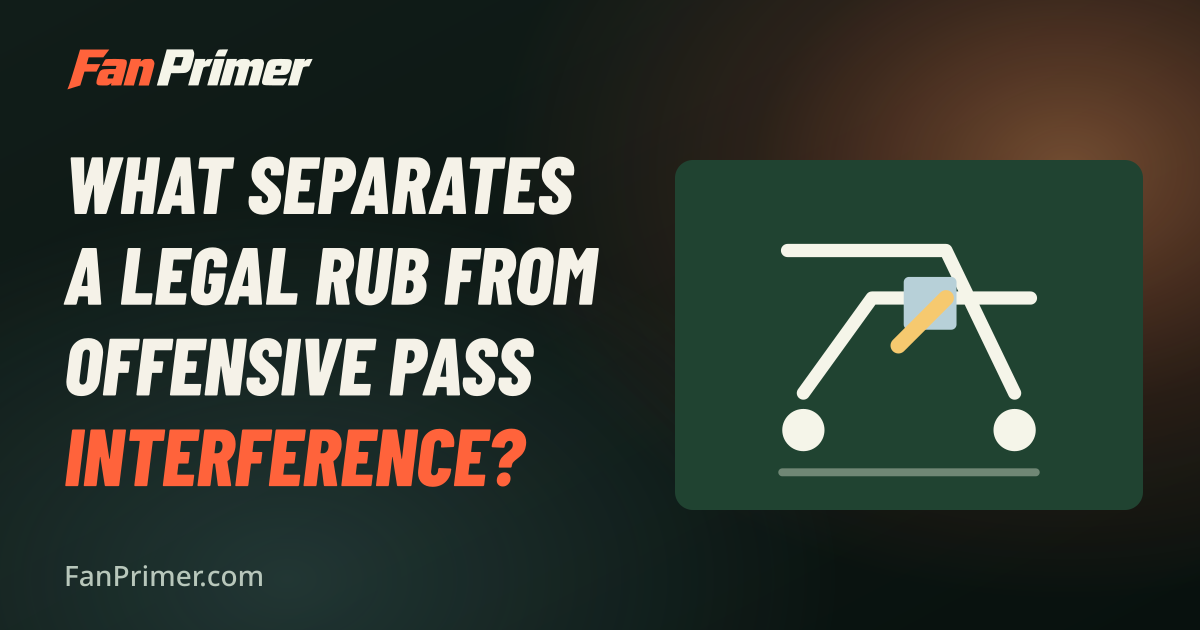
Crossing with space
A and B cross without blocking the defender. The blue path remains open.
Crossing with a block
B blocks D 4 yards beyond the starting line before the throw. The same route design now contains offensive interference.
Close view: arms clear
B passes nearby with his arms clear. D can continue along the blue path.
Close view: chest block
B extends his arms into D’s chest and stops D. The highlighted contact supplies the block, not the crossing lines.
Cream A/B: receivers · Blue D and dashed path: defender · Gold: the added block.
Crossing routes can create space legally
Two receivers can run crossing paths and make defenders work around them. Calling the play a rub or pick does not decide the ruling. In the foul example, the receiver extends his arms into a defender's chest and blocks him instead of continuing his route.
The foul can happen before the throw
Offensive pass-interference restrictions begin when the ball is snapped. A receiver who blocks a defender 4 yards beyond where the play began can foul before the quarterback throws. An uncatchable pass does not excuse that prohibited block.
Making room is different from playing the ball
Pushing off or cutting off a defender without trying to play the ball can be interference. Blocking a defender more than 1 yard beyond the starting line near the intended receiver is prohibited. Incidental contact can be legal; saying a receiver did not mean to interfere does not settle the call.
How it changes the next try
This pass-interference rule concerns action more than 1 yard beyond the starting line on a forward pass thrown from behind it. Contact nearer the line may still break another rule, such as holding. A 10-yard penalty can turn 2nd try, needing 6 yards, at the offense's 40 into 2nd try, needing 16, at its 30. The original target at the 46 stays put.