Penalties & rulings
What makes a tackle a horse-collar tackle?
The takeaway
A horse-collar foul uses a prohibited high collar or jersey grip to pull a runner down. Making his knees buckle can be enough, even before he lands.
See how it works
Locate the grip, then follow the pull
Runner outside the pocket and close-line play
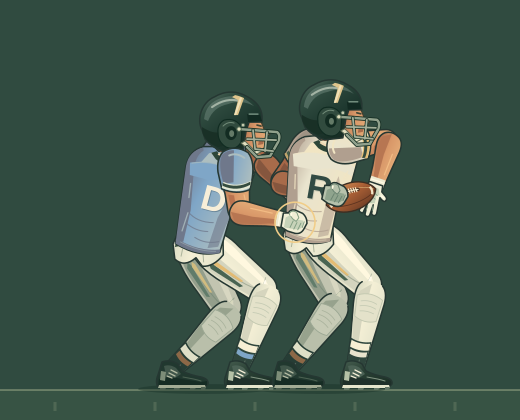
Conventional waist wrap
Inside collar and downward pull
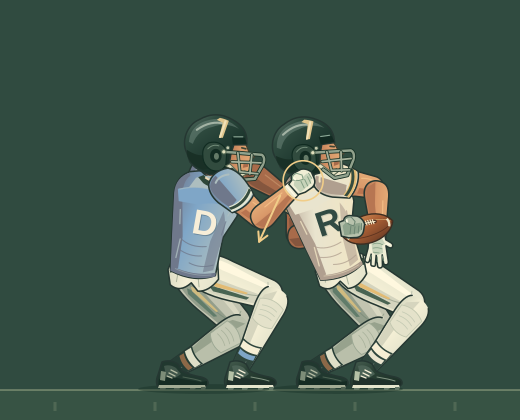
Cream: offense · Blue: defender · Gold: contact or control
Find where the hand grips
The prohibited grips include inside the back or side collar of the pads or jersey. Grabbing the jersey at the nameplate or higher also qualifies, without a hand inside the pads. An ordinary wrap at the waist does not have that high grip.
Then watch the pull
The foul also needs a pull toward the ground using that grip. Here, hooking the back collar and pulling makes the runner’s knees buckle. Officials need not wait for him to hit the grass. A high grip alone does not finish this particular foul.
There are specific area exceptions
This restriction has exceptions inside the pocket and during close-line play. The pocket extends backward from between the normal tackle positions near the ends of the main blocking line. Close-line play includes that area plus 3 yards beyond the starting line, until the ball leaves it. The pictured runner is outside both areas.
Chasing from behind is not itself the foul
The waist-wrap picture shows why hand placement and the pull matter. Conversely, staying upright does not erase a prohibited grip and pull that buckles the runner’s knees. The accepted penalty is 15 yards and an automatic first down.