Penalties & rulings
What is an illegal block in the back?
The takeaway
Pushing an opponent from behind above the waist can be an illegal block in the back. Watch the approach and first contact, not only the final picture.
See how it works
Opponent faces the blocker
The hands meet the opponent from the front. This contact alone is not an illegal block in the back.
Opponent already faces away
The blocker pushes the opponent’s back above the waist and changes his movement. This is a 10-yard foul in the return example.
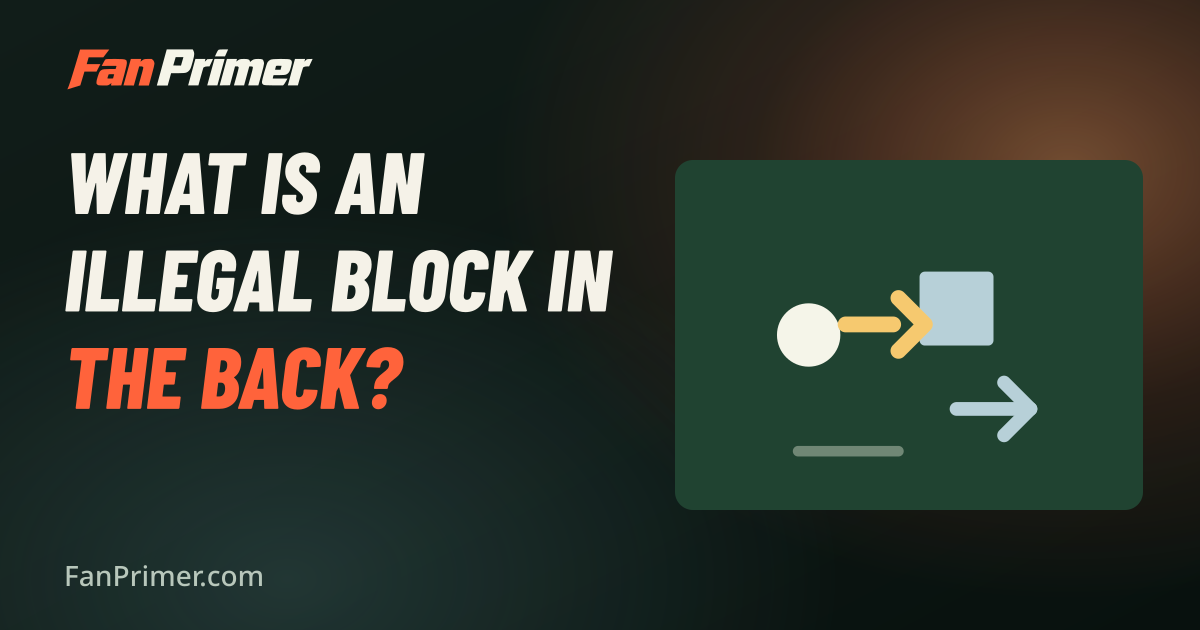
Cream B: blocker · Blue D: opponent · Gold ring: initial contact · Dashed line: waist
A push can be enough without a grab
Here, the blocker approaches a pursuer whose back already faces him before contact is imminent. Pushing that back above the waist redirects the pursuer. The blocker need not grab a jersey or knock him down to commit the foul.
A last-second turn can change the call
If the opponent turns away when contact is already imminent, hands touching his back do not automatically make this foul. Both hands on the opponent’s side are also allowed by this rule. Watch the approach and first contact; a later image of hands near the back may omit the deciding detail.
Some situations have specific exceptions
A player personally trying to recover a loose ball has an exception. Close-line play also has different permission: it includes the offensive pocket and 3 yards beyond the starting line, and ends when the ball leaves. Neither applies to this return block. Other contact rules still apply.
A long return can come back
This offensive foul normally costs 10 yards. Once the returner has possession, his team is the offense for these blocking rules. The penalty may be measured behind where the return finishes, so do not assume officials merely subtract 10 from its end.
A low block from behind is a different question
This rule concerns contact above the waist. Blocking a non-runner from behind below the waist raises the separate clipping rule. Calling every hit from behind the same thing hides the distinction.