Foundations
What is the red zone, and why does the game change there?
The takeaway
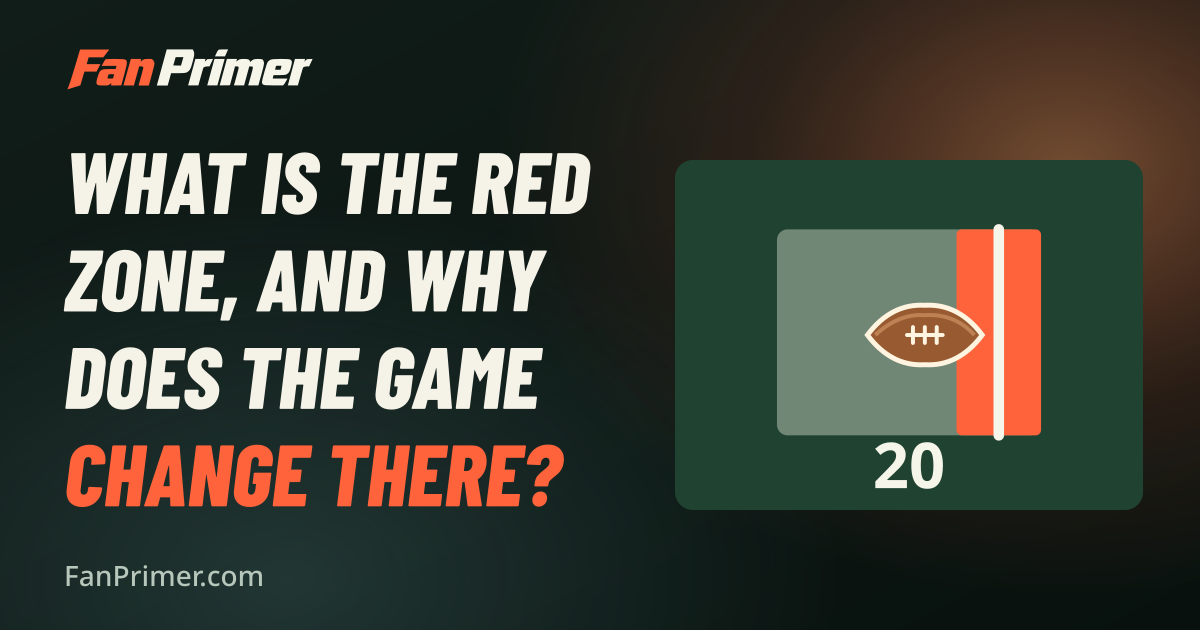
The red zone is the area near the opponent’s goal, from its 20-yard line toward the end zone. Less remaining depth changes the space available for plays.
See how it works
Near the opponent’s goal
The ball is at the opponent’s 15. Only 15 yards of playing field remain before its goal line.
It describes a useful region of the field
The red zone is a coaching and viewing term for the area close to the opponent’s end zone. In ordinary discussion it starts at the opponent’s 20-yard line. Some statistical reports count possessions from inside the 20, meaning the 19 or closer; follow the definition used by that report.
The end of the field limits the available depth
From midfield a receiver can threaten a long route behind defenders. At the opponent’s 10, the goal line is only 10 yards away and the end zone adds 10 more before the end line. The offense still has the field’s width, but less room to stretch routes deeper.
Being close does not guarantee a touchdown
The defense can stop a run, force an incompletion, cause a turnover or push the offense backward. A team may settle for a field-goal attempt. Entering the region changes the opportunity, not the scoring rules.
Red zone and goal-to-go are different labels
At the opponent’s 18, an offense can still have a first-down target at the 8. That is in the red zone but not goal-to-go. When the goal line is the target for the current set, the situation is goal-to-go.