Foundations
What does goal-to-go mean?
The takeaway
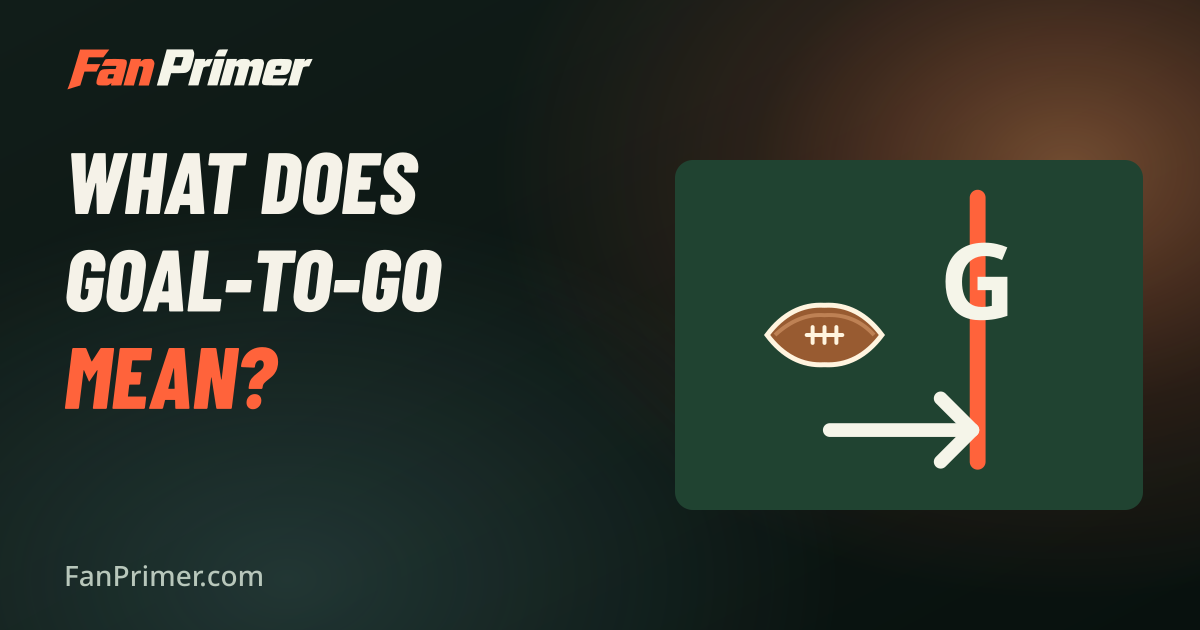
Goal-to-go means the goal line is the target for the current set of downs. A short gain uses a try without creating another first-down target.
See how it works
1st and goal at the 7
The offense begins 7 yards from the goal line. There is no separate first-down target beyond it.
Gain 4: second and goal at the 3
Four yards of progress leave 3 yards to score. One try has been used; the set does not reset.
A new set cannot put its target past the goal
Ordinary first downs set a target 10 yards ahead. If the opponent’s goal line is closer, that goal line becomes the target instead. Starting a new set at the opponent’s 7 therefore produces first and goal.
The down count still works normally
A 4-yard gain from the 7 to the 3 uses first down and leaves second and goal. An incomplete pass from there normally leaves third and goal at the 3. The offense does not receive four new tries merely for getting closer.
A loss can make goal-to-go longer than 10 yards
If the offense loses 8 yards from second and goal at the 3, it normally faces third and goal at the 11. The goal line remains the target even though it is now more than 10 yards away. A penalty can also move the ball while leaving that target unchanged.
A penalty can still award a new set
A defensive foul carrying an automatic first down can create first and goal again, with the new spot set by its enforcement. That fresh set comes from the penalty rule, not from an ordinary gain that fell short of the goal.