Foundations
What do the head coach and coordinators do?
The takeaway
The head coach oversees the team. Coordinators organize offense, defense and special teams. Play-calling responsibilities vary: the job title alone does not identify who calls every play.
See how it works
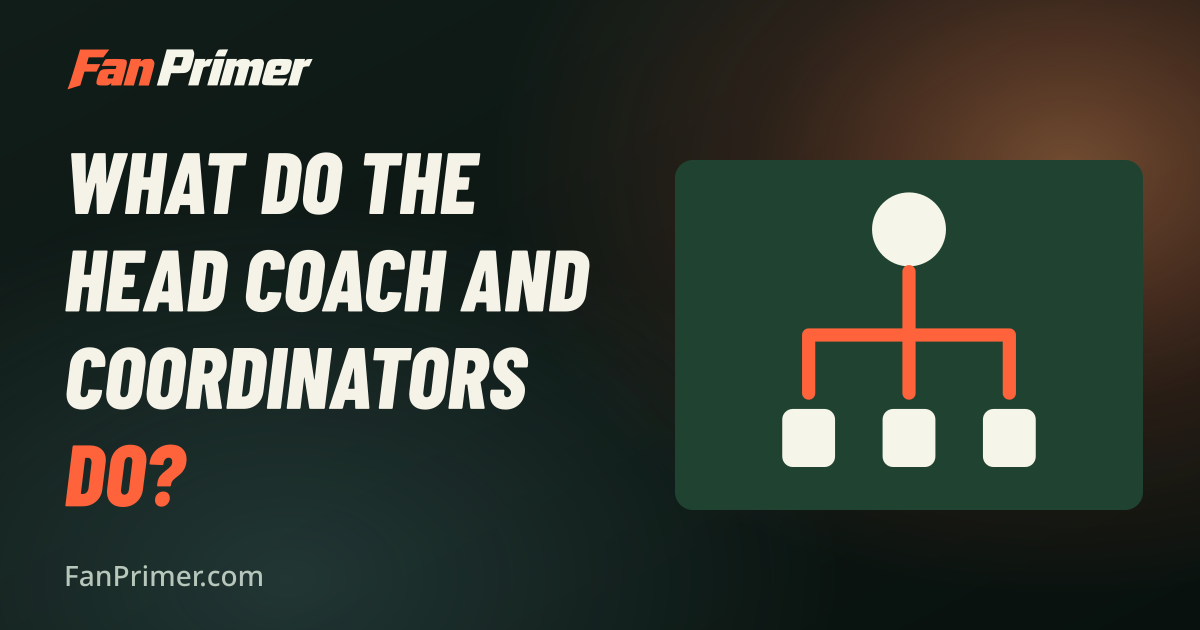
A simplified coaching staff
- Head coach
- Oversees the team and major game decisions.
- Offensive coordinator
- Organizes the offensive plan and adjustments.
- Defensive coordinator
- Organizes the defensive plan and responses.
- Special-teams coordinator
- Organizes kicking, returning and coverage work.
The roles describe responsibility. The exact play caller and communication path depend on the team.
The head coach connects the whole game
Offense, defense and special teams affect one another. A head coach oversees the team’s approach and major choices, such as whether to attempt a fourth-down conversion or manage the clock differently. Assistants supply information and recommendations.
Coordinators organize a unit’s plan
The offensive coordinator works on how the offense attacks; the defensive coordinator works on how the defense responds. A special-teams coordinator handles the kicking phase. Position coaches work more directly with particular player groups. These roles involve preparation and adjustments as well as the next call.
Coordinator does not always mean play caller
Some head coaches call their own offensive or defensive plays. Others give that responsibility to a coordinator or another assistant. An offensive coordinator can remain in that role while someone else chooses the snap-by-snap call. Check the team’s stated arrangement before attributing every decision to a title.
The players still have to communicate and execute
The call must reach the field, and players may make permitted adjustments before or during the play. A coordinator’s plan and a quarterback’s audible can both influence the same snap. Seeing the final action alone does not reveal which coach or player made every earlier choice.