Foundations
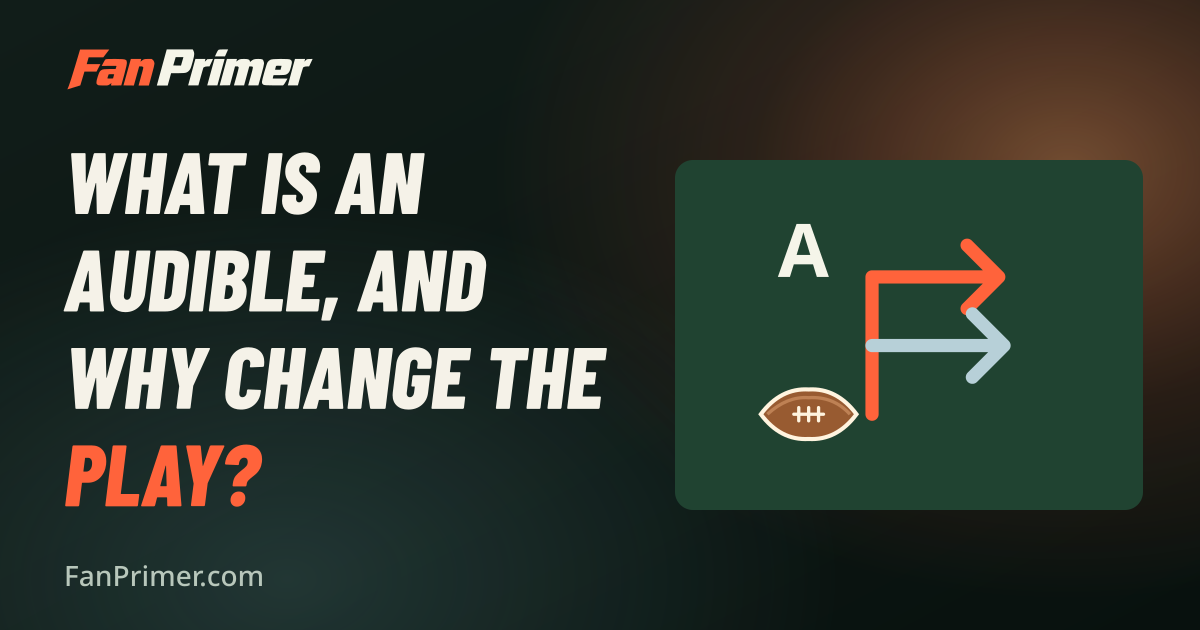
What is an audible, and why change the play?
The takeaway
An audible changes the called play before the snap. The quarterback communicates an adjustment after seeing how the defense lines up.
See how it works
Read, communicate, execute
- 1Original call: run
The offense reaches the line with a shared plan.
- 2Defense crowds the middle
The quarterback sees a reason to reconsider.
- 3New call: pass
He signals the change before the snap; everyone must adjust.
Changing the call only helps if the other offensive players receive it and the new play fits the situation.
The first call is made before the full picture
The offense chooses a play before it sees the defense’s final positions. At the line, the quarterback may see pressure, a crowded running lane or a receiver with useful space. An audible lets the offense change its plan before starting.
The message has to reach every affected player
Changing from a run to a pass can change who blocks, who runs a route and what the ball carrier expects. A shouted word or hand signal can identify an adjustment the team has practiced. The exact vocabulary is team-specific.
The defense can disguise or change its plan
An apparent blitz can become coverage after the snap, and defenders can adjust when they hear the offense change its call. The audible is a decision under uncertainty, not proof that the quarterback knows exactly what will happen.
A pre-snap change differs from a decision during the play
The audible happens while the ball is still dead. On an option play, a player can instead make a planned choice after the snap by reading a defender. Both involve a decision, but the timing and teammates’ instructions differ.