Downs & possession
Why can a runner get up after falling without being down?
The takeaway
An NFL runner can get up after an untouched fall. A defender’s touch can end the play while he is down, and other stopping rules still apply.
See how it works
An untouched runner who has not given himself up can get up and continue.
Untouched fall
A runner who has not given up can get up and run.
Contact while down
The ball is dead; getting up cannot restart the play.
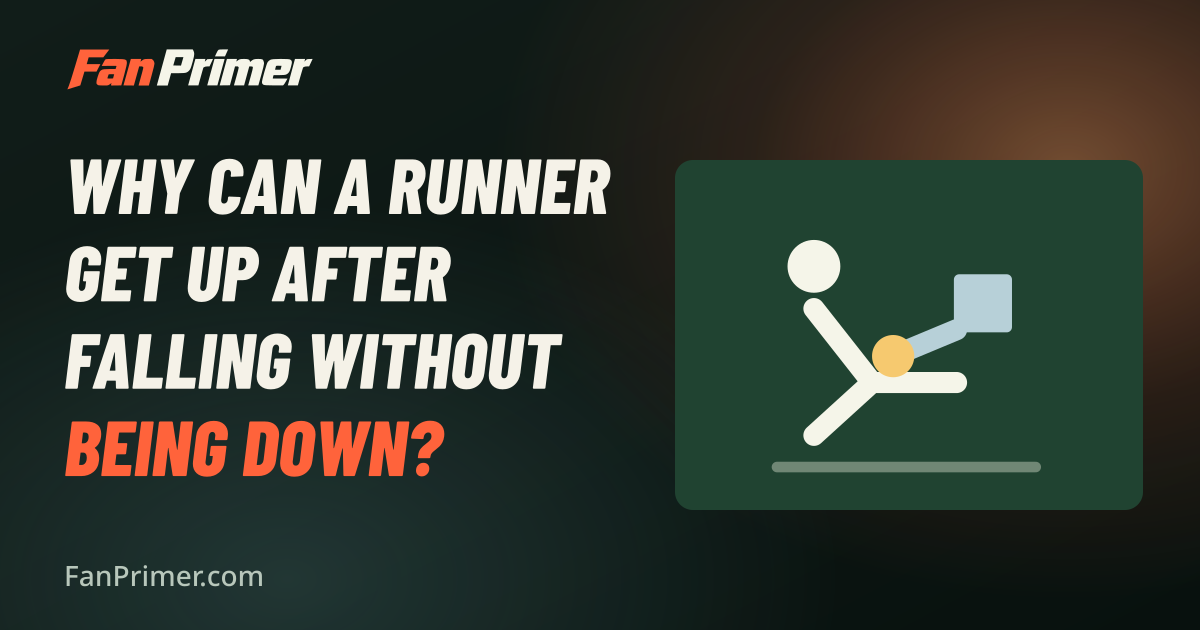
Cream: runner · Blue: defender
Untouched fall
A runner who has not given up can get up and run.
Contact while down
The ball is dead; getting up cannot restart the play.
Untouched fall
A runner who has not given up can get up and run.
Contact while down
The ball is dead; getting up cannot restart the play.
Untouched fall
A runner who has not given up can get up and run.
Contact while down
The ball is dead; getting up cannot restart the play.
A knee and a defender’s touch can end the run
For the usual tackle, a defender must touch the runner and something other than the runner’s hand or foot must touch the ground. A knee or elbow qualifies. The defender can cause the fall or touch a runner who has already fallen. A hand on the grass by itself usually does not end the run.
An untouched slip can leave the play going
A runner who slips without contact can get up and keep trying to advance. But a defender touching the ball held by the fallen runner also ends the play. Watch the official’s decision about whether play has stopped.
A runner can also give himself up
A quarterback kneeling with the ball, or a runner clearly giving up, can end the play without any defender touching him. Slides and dives have specific rules. Officials can also stop a runner who is held and can no longer move forward, even while he is standing.