Downs & possession
What does the forward-progress spot measure?
The takeaway
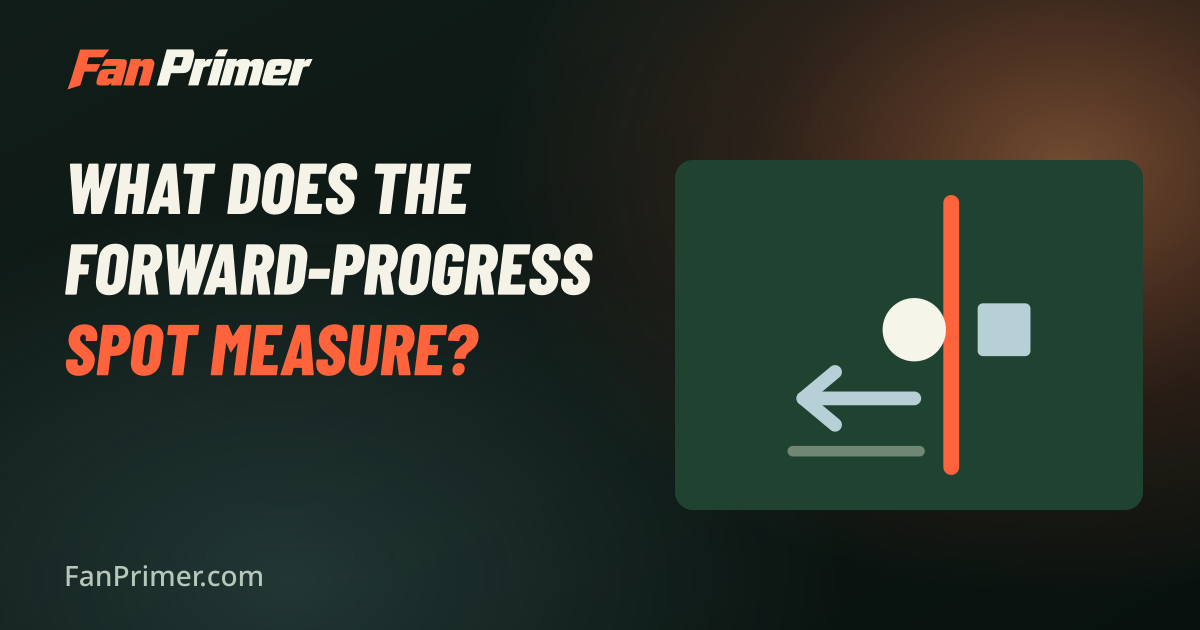
When defenders stop a runner’s advance, he keeps the yards the ball reached. Being pushed backward afterward does not take those yards away.
See how it works
Carried back to the 39, the runner keeps progress at the 42. Next snap: 3rd and 3 after a 7-yard gain.
Where advance ends
The runner is restrained with the ball’s forward tip at the 42.
Where the tackle finishes
Being carried back to the 39 does not erase the progress spot.
Cream: runner · Blue: defender · Dashed blue: starting spot · Orange: first-down target · Advance →
Where advance ends
The first-down target is 10 yards ahead.
Where the tackle finishes
Follow the same runner after the defender stops his advance.
Where advance ends
The runner is restrained with the ball’s forward tip at the 42.
Where the tackle finishes
Follow the same runner after the defender stops his advance.
Where advance ends
The runner is restrained with the ball’s forward tip at the 42.
Where the tackle finishes
Being carried back to the 39 does not erase the progress spot.
The play can end before the runner falls
Defenders can stop a runner by holding him so he cannot advance, even while he stays upright. Officials use the ball’s position when that forward movement ends. Pushing him backward afterward does not reduce that gain.
A backward push does not erase the gain
The team starts at its own 35-yard line on its 2nd try, needing 10 yards to reach the 45. A defender stops the ball at the 42, then carries the runner back to the 39. The next play starts at the 42: 3rd try, 3 yards needed. The gain is 7 yards, even though the tackle finishes farther back.
Measure the ball, not the helmet
Officials use the front tip of the ball the runner controls. His feet, helmet and final landing place do not replace that measurement. Here, the ball reaches the 42 but not the target at the 45, so the team has made progress without earning fresh tries.
Choosing to run backward is different
A runner does not automatically keep the farthest point he reached at any time. If he is still free to move and turns backward himself, he may lose that ground. The protection in this example comes from the defender stopping him and pushing him back.