Penalties & rulings
What is the difference between a cut block and a chop block?
The takeaway
A cut block starts below the waist. A chop block adds a teammate’s high block against the same defender. The high-low combination is illegal, and other low blocks face limits.
See how it works
Cut block: one blocker
Blocker 1 contacts the front of a grounded defender’s thigh. This isolated low block is legal only if other restrictions are satisfied.
Chop block: two blockers
Blocker 2 engages above the waist while blocker 1 contacts the thigh. This high-low combination is a 15-yard foul.
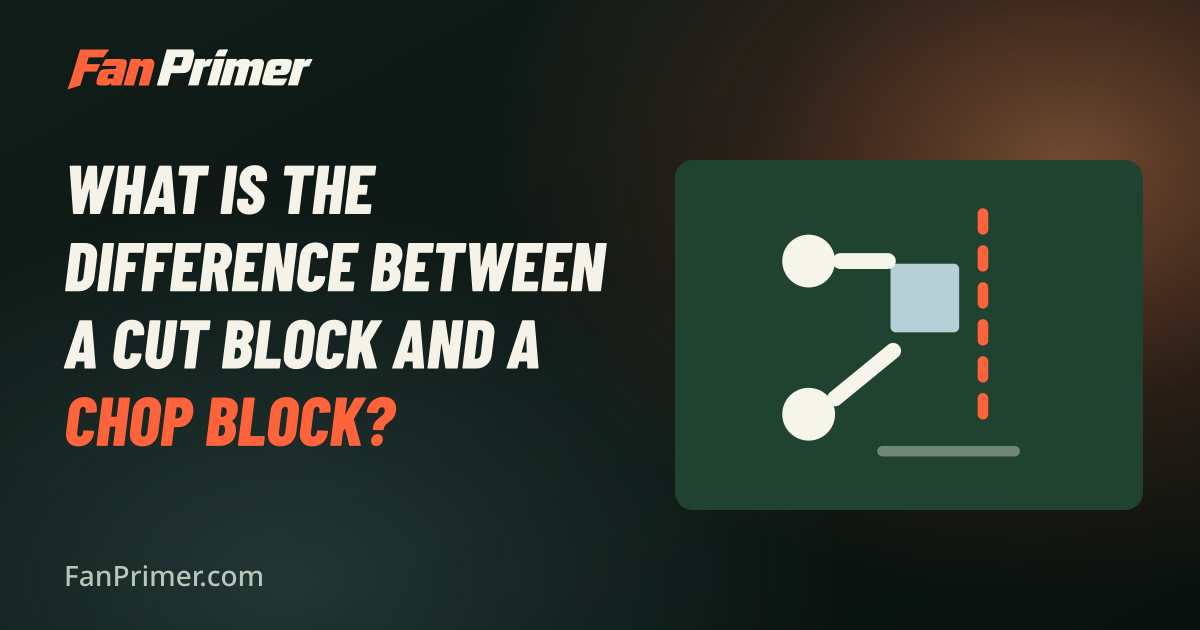
Cream 1 and 2: blockers · Blue D: defender · Gold rings: contact · Dashed line: waist
Inside the box is only the starting test
Outside this box, low blocks against ordinary opponents are prohibited. Kicks and changes of possession bring further restrictions, even inside it.
The box stays fixed after the ball leaves. Other blocking fouls can still occur inside it.
Look at the first contact
A low block begins below the waist against an opponent with at least one foot on the ground. Contact starting higher and sliding down is treated differently. The single blocker here meets the front of the defender’s thigh.
A second blocker can make it a chop block
One blocker occupies the defender above the waist while another hits him at the thigh or lower. That high-low combination costs 15 yards, even in the normal blocking area around the line. The low hit may come first or second; reversing the order does not make it legal.
A single low block is not always allowed
Before possession changes on a snapped play, an ordinary low block must start inside the tight end box. This area reaches 5 yards forward and backward from the starting line and 2 yards outside the usual tackle positions, the ends of the main blocking line. Contact against a runner or player trying to catch has separate permission. Other rules still apply inside the box.
Kicks and turnovers restrict low blocks further
After possession changes, low blocks are prohibited. On a play that includes a kick, no one on the receiving team may block low. Once the ball is kicked, no one on the kicking team may do it either. The tight end box does not excuse them. An illegal low block costs 15 yards.
Potential receivers get additional protection
While the player who took the snap remains in the pocket intending to pass, an eligible receiver starting more than 2 yards outside his tackle cannot be blocked low. A closer receiver gains that protection after crossing the starting line. It ends if the snap receiver leaves the pocket or no longer intends to pass. An illegal receiver cut block costs 15 yards and a first down.
Nearby teammates alone do not prove a chop block
A blocker holding a pass-protection stance in front of the defender can form the high part even without contact. But incidental contact while escaping, or contact started by the defender, has specific exceptions. Follow the blocking action and its timing rather than counting players nearby.