Offense & play design
Why do offensive tackles move backward in pass protection?
The takeaway
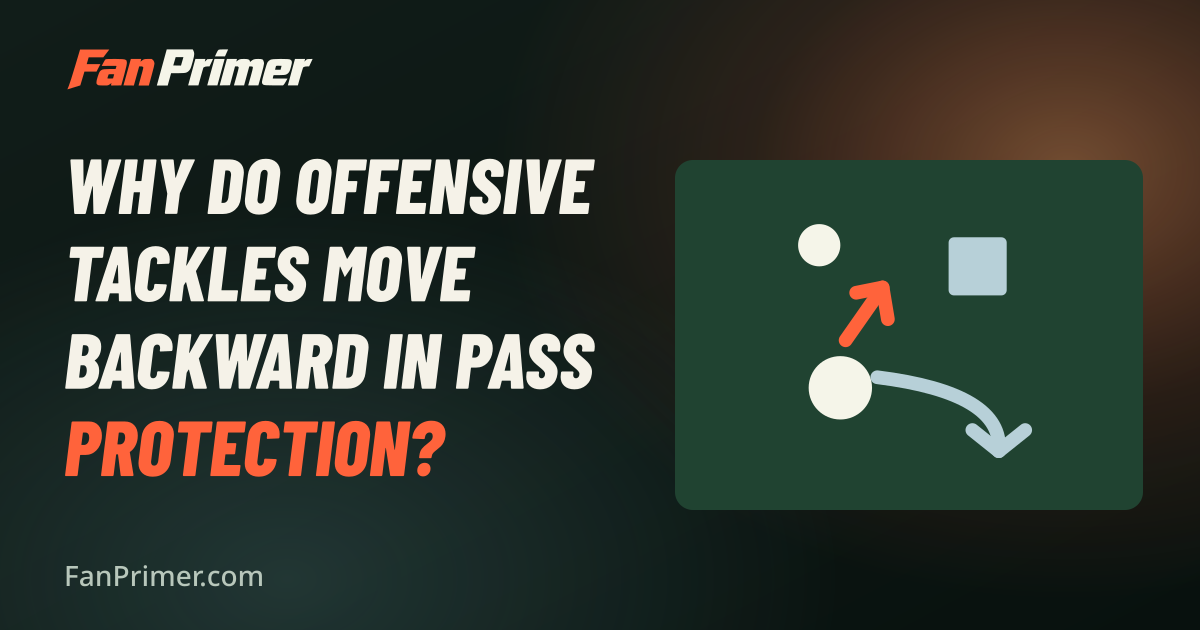
A tackle steps backward to stay between an outside rusher and the quarterback. Controlled retreat can force the defender onto a longer path.
See how it works
The tackle can guide the rusher around the pocket. Lunging can open an inside path.
Controlled depth
The tackle keeps the rusher outside the quarterback.
Lunge forward
The rusher can cross the tackle’s inside shoulder.
Cream: offense · Blue: defense · T: tackle · E: edge rusher · QB: quarterback
Controlled depth
The tackle keeps the rusher outside the quarterback.
Lunge forward
The rusher can cross the tackle’s inside shoulder.
Controlled depth
The tackle keeps the rusher outside the quarterback.
Lunge forward
The rusher can cross the tackle’s inside shoulder.
Controlled depth
The tackle keeps the rusher outside the quarterback.
Lunge forward
The rusher can cross the tackle’s inside shoulder.
Controlled depth
The tackle keeps the rusher outside the quarterback.
Lunge forward
The rusher can cross the tackle’s inside shoulder.
The quarterback needs space behind the line
On a pass where the quarterback drops back, he needs room behind his blockers. A tackle charging straight forward may let an outside defender run around him. Stepping back changes where the blocker meets the rusher.
Protect the shorter path inside too
The tackle steps backward and outward while staying balanced. That can force the defender to go farther around the quarterback. Turning too far or leaning forward can instead let the defender cut inside toward the passer.
Different throws need different footwork
A quick throw may need only a short retreat. A deeper quarterback drop may require more space, and a teammate can help block. Moving backward is useful only if it keeps the tackle in position between the defender and quarterback.