Offense & play design
Why does a running back stay back to protect the quarterback?
The takeaway
A running back may stay near the quarterback to block an extra rusher. Whether he can leave to catch a pass depends on his assignment.
See how it works
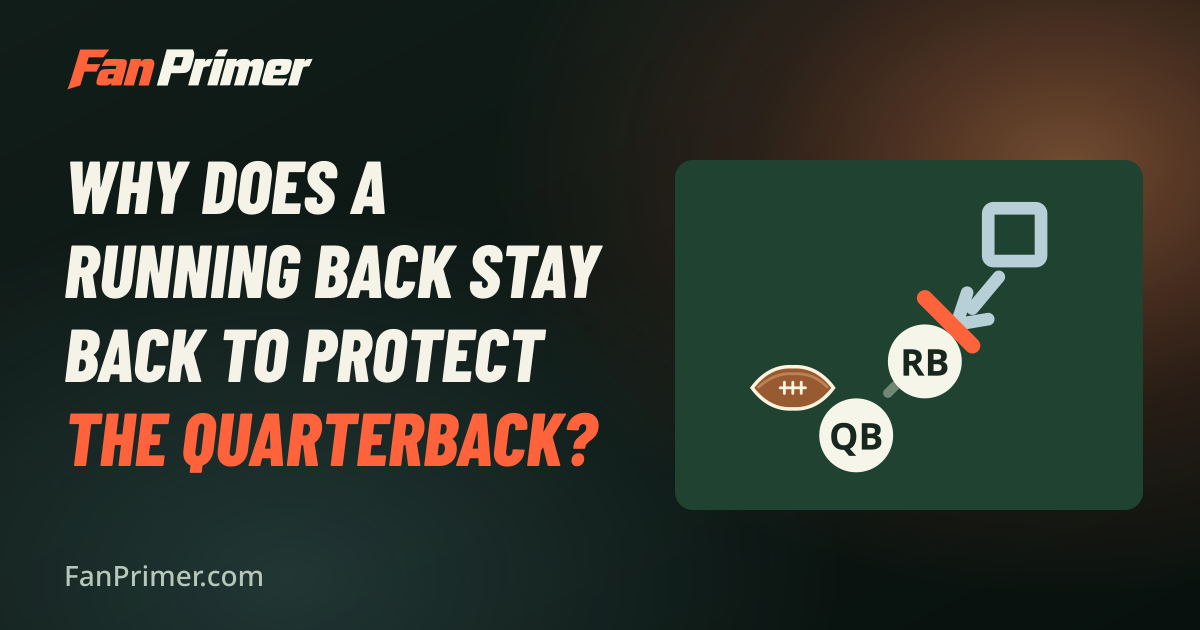
The back meets the rusher who would otherwise reach the quarterback. In the check-release example, no assigned threat comes, so he releases.
Assigned threat rushes: stay and block
Assigned threat drops: release allowed
Cream circles: offense · Blue squares: defense · Gold ring: assigned threat · Dashed blue: starting line · RB: running back · QB: quarterback · L: linebacker
Assigned threat rushes: stay and block
Assigned threat drops: release allowed
Assigned threat rushes: stay and block
Assigned threat drops: release allowed
Assigned threat rushes: stay and block
Assigned threat drops: release allowed
Assigned threat rushes: stay and block
Assigned threat drops: release allowed
A pass can give the back a blocking job
Pass protection is the plan for keeping rushers away from the quarterback. Here, the back must watch a highlighted linebacker and block him if he comes around the right edge. The back is carrying out that job, rather than waiting for a handoff.
If the defender rushes, stay with him
In the first example, the linebacker comes around the right. The back moves to meet him between the line and quarterback, then keeps blocking while the throw develops. One good bump is not enough if that defender remains his responsibility.
If the threat stays back, a route may open
In the second example, the linebacker drops back to guard passes and no other assigned threat appears. This particular play lets the back leave for a receiving route after that check. Other plays may require him to keep blocking or send him out immediately.
More blocking means fewer receivers
While the back protects, the quarterback has one fewer teammate running a pass route. The offense accepts that cost to give other routes time. This differs from a chip block, where a player plans brief help and then leaves. Here, the back must handle his assigned rusher as long as needed.