Foundations
What is a drive, and when does it end?
The takeaway
A drive is one team’s stretch with the ball on offense. First downs can extend it; a score, a possession change or the half ending can finish it.
See how it works
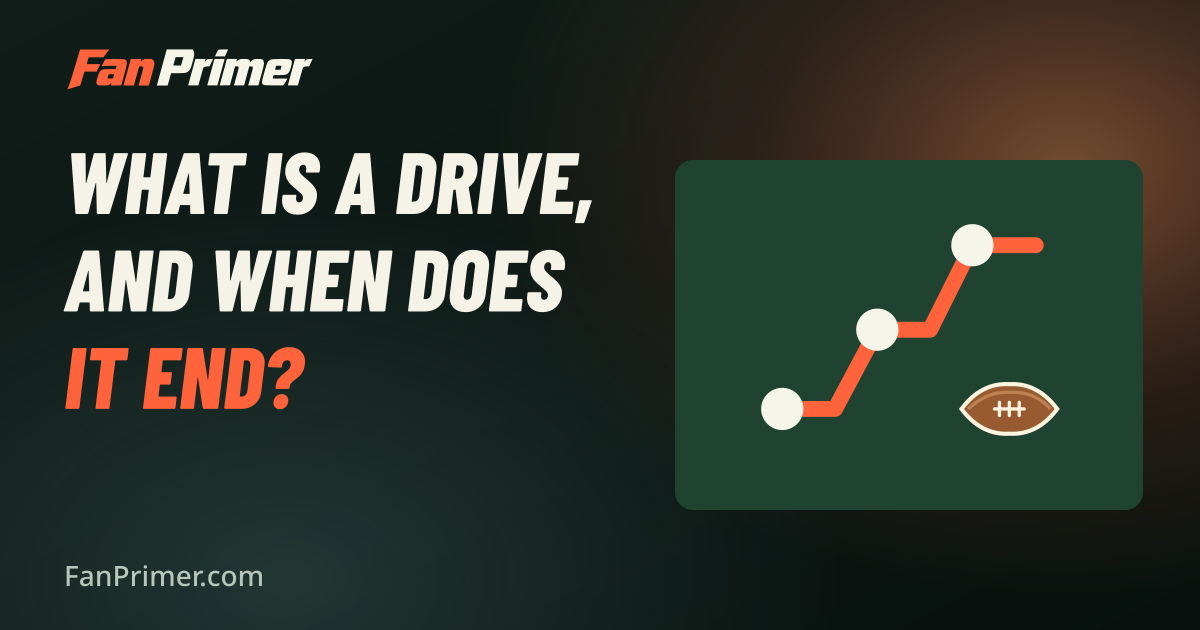
One possession, several situations
- Own 20: start
- 1st try, needing 10 yards.
- Own 32: first down
- A 12-yard gain earns a fresh set; the drive continues.
- Own 38: fourth down
- Later plays leave 4 yards needed.
- Punt
- The other team takes over after the kick.
The offense keeps its drive through the first down. Punting gives the opponent the next offensive opportunity.
A drive is bigger than one set of downs
The offense starts a drive when it takes over the ball. It may earn a first down, reset the try count and keep advancing during that same drive. Reaching the next target continues the opportunity; it does not automatically start a new drive.
Several different endings are possible
A touchdown or field goal can end the offensive possession with points. A punt, an interception, a fumble lost to the defense or a failed fourth-down attempt can give the ball to the opponent. A safety can also end the possession. The next team’s offensive possession is a different drive.
A quarter break does not normally end it
The same possession ordinarily continues from the first quarter into the second, and from the third into the fourth, with the teams changing ends. Halftime is different: the next half begins with its own kickoff. A drive can therefore end because the half runs out even without a turnover.
Follow possession before counting plays
A long drive might contain many first downs; a short one might end after a single interception. To recognize the boundary, ask which team has the offensive opportunity now and what ended the previous one.