Offense & play design
How does a screen pass work?
The takeaway
A screen is a short pass with blockers preparing a path for the receiver. The gain often comes from running after the catch.
See how it works
A running-back screen starts with a familiar passing look.
● Offense →□ Defense⇢ Pass / route
QB: quarterback · RB: running back · LG/RG: left/right guard
Set up blockers for a short catch
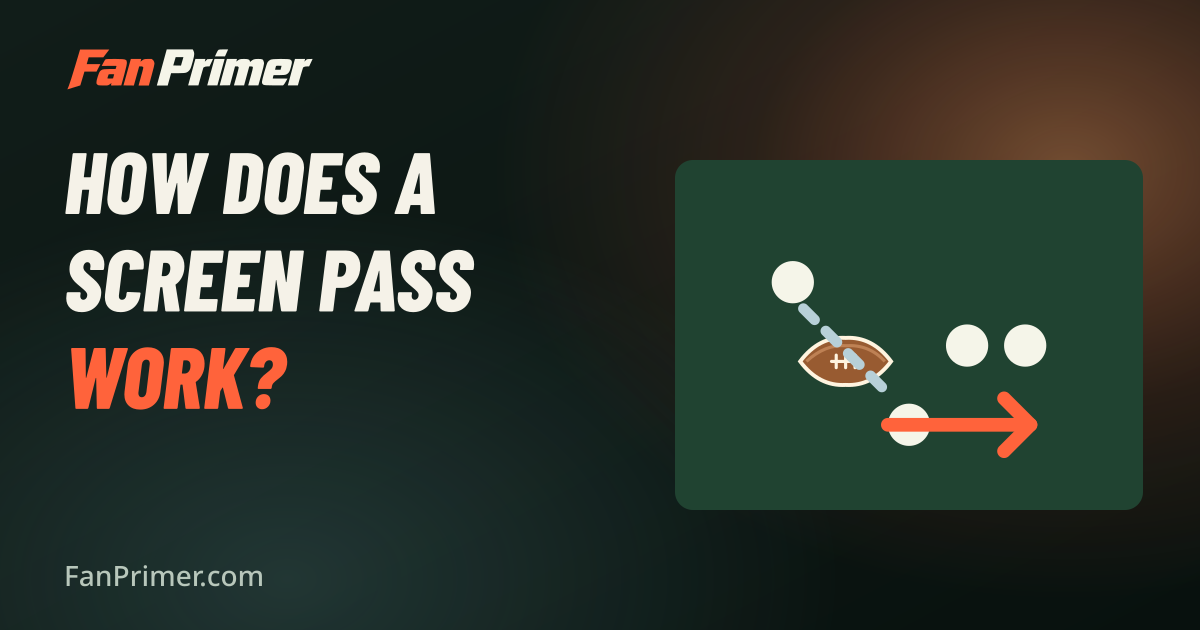
On this running-back screen, the quarterback first looks ready for a normal pass. The back waits briefly, then moves to the catching spot. Selected linemen move ahead to block. The short throw sets up a potentially longer run.
Letting rushers through can be intentional
Blockers can engage defenders briefly, then release them toward the quarterback while moving toward the receiver. The throw goes past those rushers to the back. The timing must work: pressure arriving too quickly can disrupt the throw or tackle the quarterback.
Follow the receiver, blockers and ball
Find the back waiting behind where the play began, the blockers moving ahead, and the short throw. After catching, the back follows the blocks forward. NFL linemen still have restrictions on advancing before a forward pass. A catch behind the starting line does not automatically excuse them.
The defense can recognize the setup
A defender may follow the receiver instead of rushing. A linebacker may beat a lead blocker. A defender may also touch the pass, or the back may arrive too early. A screen can fail even when the throw itself is accurate.
Other screens use different arrangements
Receiver screens, including bubble and tunnel versions, use other catching spots and blockers. The running-back version here shows the basic relationship. Also check the throw's direction: an uncaught backward pass stays live, unlike an incomplete forward pass.