Penalties & rulings
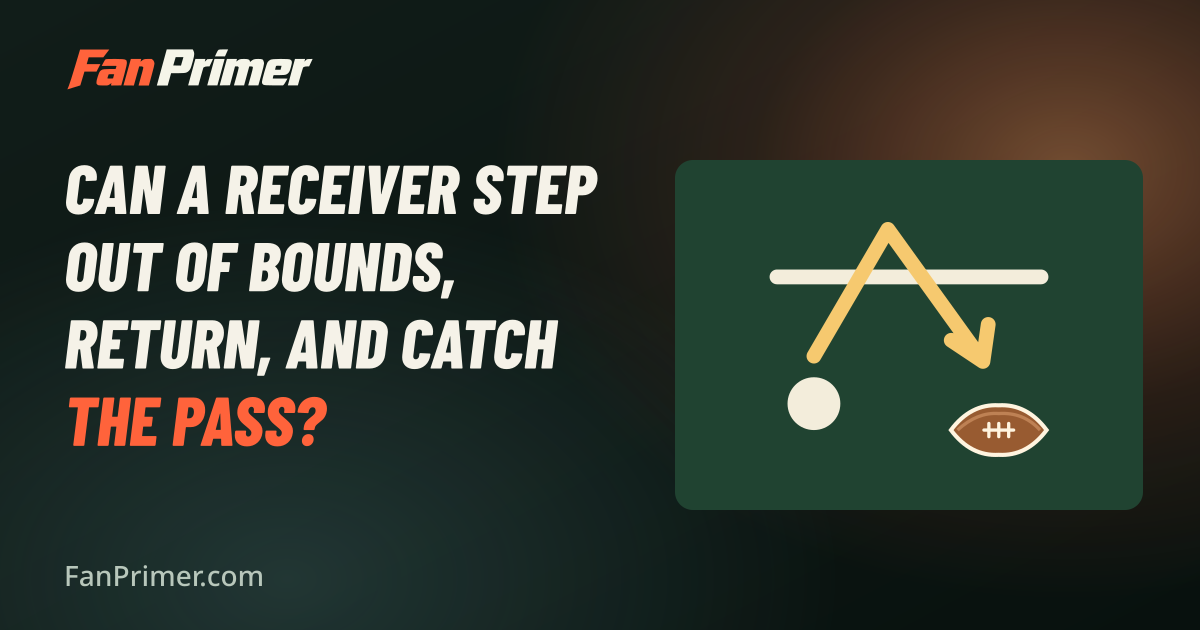
Can a receiver step out of bounds, return, and catch the pass?
The takeaway
A receiver who steps out usually cannot be first to touch a forward pass after returning. Being illegally forced out creates an important exception.
See how it works
First touch before proper return
The pass is immediately incomplete. Reestablishing requires both feet or another body part besides the hands.
Returns after voluntary or legal exit
An accepted illegal-touching penalty consumes the down at the previous spot. A caught ball remains live until another rule ends it.
Opponent’s foul forces the exit
The foul exception requires an immediate attempted return, proper reestablishment and no touch before returning. A legal push does not qualify.
Getting back in needs enough contact inside
After leaving the field, a receiver must reestablish himself inside before touching the pass. That generally requires both feet, or another body part other than the hands, touching inside without continuing contact outside. Being back inside and being allowed to touch first are separate questions.
A legal push does not restore first-touch rights
A receiver who steps out voluntarily, or is legally forced out, normally cannot return and be first to touch a forward pass. If he is fully back inside and then catches it first, the play continues, but an accepted illegal-touching penalty uses up the try at the previous starting spot.
One foot back in is not enough
If he touches the pass before reestablishing himself inside, it is immediately incomplete. That is different from the illegal-touching foul after a full return. He cannot touch the ball with only one foot reestablished, then fix the catch by landing the second foot afterward.
An illegal push creates an exception
A receiver illegally forced out by an opponent may return and be first to touch if he immediately tries to come back and fully reestablishes himself inside before touching. The illegal nature of the push matters; simply being pushed out does not qualify.
Another eligible touch can change the answer
Once a defender or another eligible offensive player touches the pass, the returning receiver can become eligible to touch it too. He still must be inside the field. A defender returning from out of bounds to intercept is not automatically subject to the same first-touch restriction as an offensive receiver.