Offense & play design
What changes between a quarterback sneak and a tush push?
The takeaway
Both plays send the quarterback forward from close behind the center. A tush push adds teammates pushing from behind. Pushing is allowed; pulling is prohibited.
See how it works
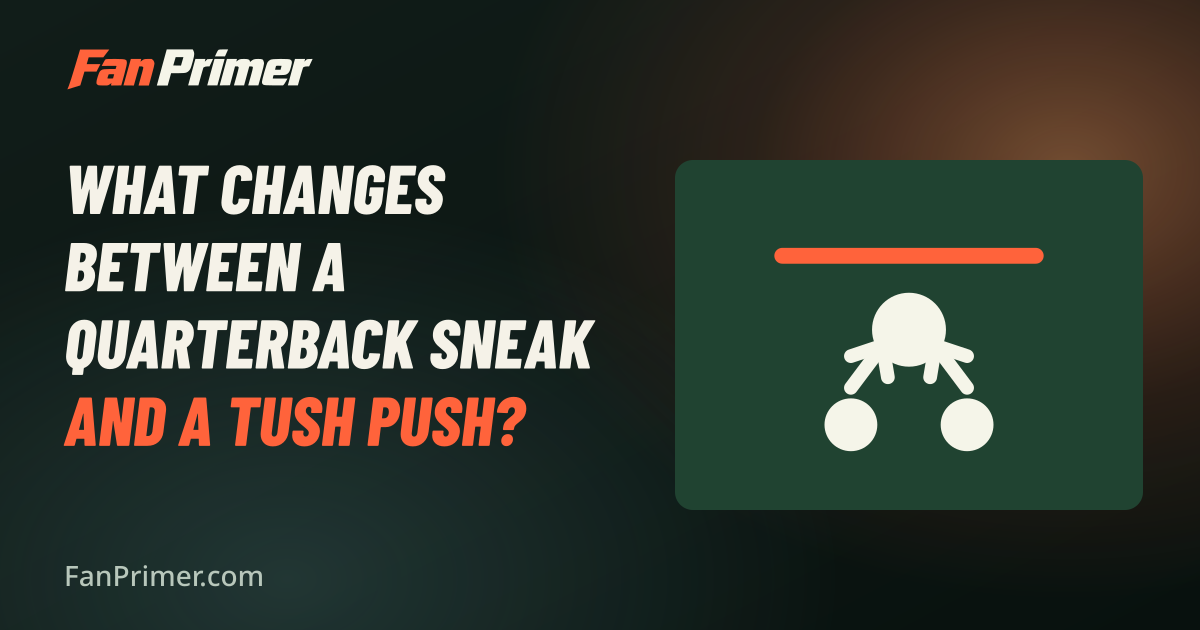
The push adds teammates driving the ball carrier forward. A conventional sneak need not include that help.
Conventional sneak
The quarterback drives behind the interior blocks.
Sneak with a push
Teammates add forward pressure from behind the ball carrier.
Cream: offense · Blue: defense · Arrow: path · Dashed blue: line of scrimmage · QB: quarterback · C: center
Conventional sneak
The quarterback drives behind the interior blocks.
Sneak with a push
Teammates add forward pressure from behind the ball carrier.
Conventional sneak
The quarterback drives behind the interior blocks.
Sneak with a push
Teammates add forward pressure from behind the ball carrier.
Conventional sneak
The quarterback drives behind the interior blocks.
Sneak with a push
Teammates add forward pressure from behind the ball carrier.
Conventional sneak
The quarterback drives behind the interior blocks.
Sneak with a push
Teammates add forward pressure from behind the ball carrier.
Both aim for a short gain
On a quarterback sneak, the quarterback takes a direct snap close behind the center and drives into an inside opening. The line tries to create space. Teams often use it when only a small gain is needed, but the defense can still stop the ball short.
The added helpers push from behind
The version called a tush push places teammates behind the quarterback to push him forward after the snap. He still carries the ball, and the linemen still need to block. The formation does not automatically earn a first down or change how a touchdown is scored.
Pushing and pulling have different rules
Under the 2026 NFL rules, teammates may push a ball carrier from behind. They cannot pull him in any direction; that costs 10 yards. Grasping or encircling teammates to form an interlocked block is also prohibited. Ordinary blocking and safety rules still apply.
Measure the ball, not the shoulders
For a first down, the ball must reach the required target before the play ends. At the goal line, a runner inside the field can score when the ball he controls reaches the goal-line plane. His shoulders crossing is not the test. Officials can stop play once his forward progress ends.