Scoring & kicking
Who is the player standing behind the punt blockers?
The takeaway
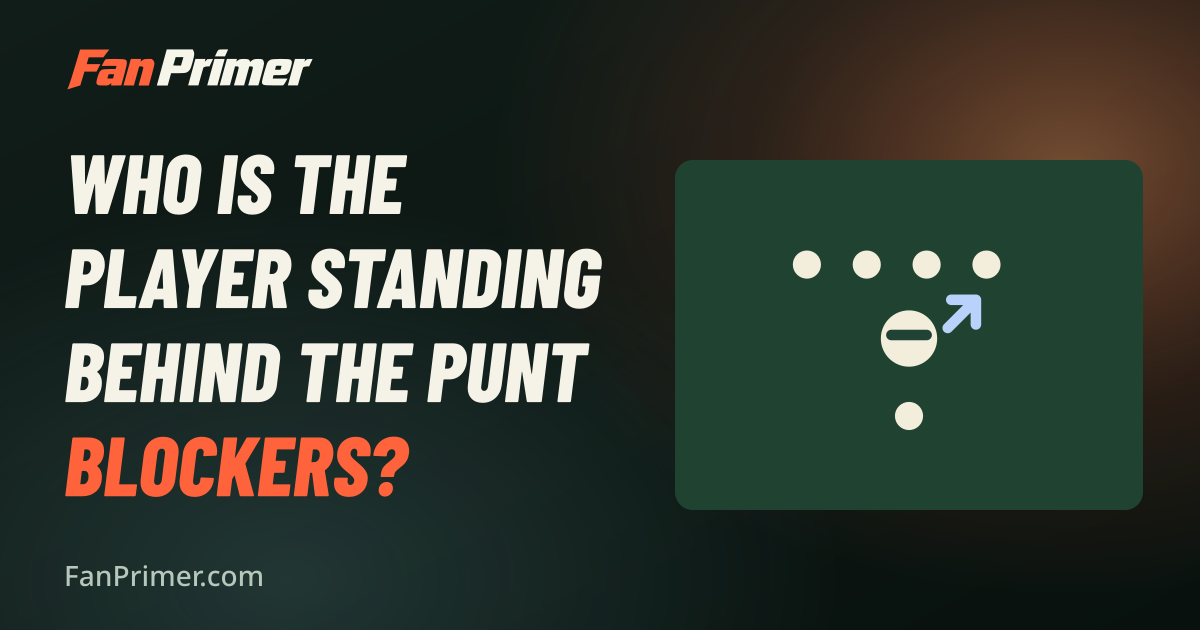
The player between the punt blockers and punter helps organize protection. He deals with a rusher getting through before he leaves to help chase the kick.
See how it works
In this assignment, the protector meets the rusher behind the line, preserving space for the punter’s drop and kick.
One inside protection assignment
Calls and assignments vary by team.
Cream: punt team · Blue R: rusher · PP: personal protector · P: punter · G: gunner
One inside protection assignment
Calls and assignments vary by team.
One inside protection assignment
Calls and assignments vary by team.
One inside protection assignment
Calls and assignments vary by team.
One inside protection assignment
Calls and assignments vary by team.
Find the player ahead of the punter
The personal protector, also called an upback, stands behind the main blockers but in front of the punter. He can inspect the rush and communicate the blocking call. He supplies another barrier while the punter catches, drops and kicks the ball.
Watch which gap he moves toward
Here, a defender threatens a gap in the middle. As the snap goes back, the protector steps toward that threat. He meets the rusher before the defender reaches the space the punter needs to kick.
Block first, chase afterward
The protector handles the inside threat until the punt is kicked, then heads downfield to help stop the return. In the NFL, this central blocker cannot go more than 1 yard beyond the starting line before the kick. The 2 eligible players at the wide ends in this formation can leave earlier.
His position does not reveal every assignment
Teams use different formations and rules for which rusher he takes. His location is a clue, not a promise to block one particular gap. Watch the rush and his first steps to see which threat he keeps from the punter.