Downs & possession
Why can an offensive lineman catch a tipped pass?
The takeaway
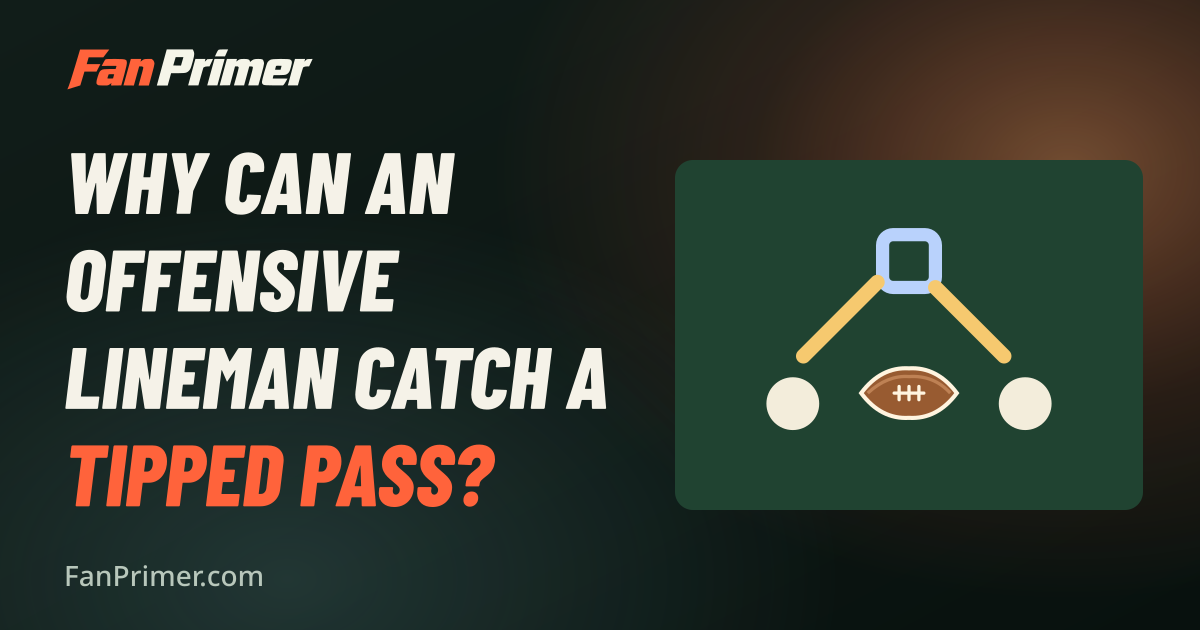
A blocker who normally cannot catch a pass may catch it after a defender or eligible teammate touches it. He cannot create that permission himself.
See how it works
Defender touches it
This touch opens catching eligibility for offensive players; an earlier foul still counts.
Eligible teammate touches it
This touch opens catching eligibility for offensive players; an earlier foul still counts.
Ineligible teammate touches first
An intentional first touch by an originally ineligible player is illegal touching.
A touch can change who may catch the pass
A blocker in the middle of the offensive line normally cannot catch a forward pass. But if a defender or a teammate already allowed to catch it touches a pass thrown from behind the starting line, every offensive player becomes allowed to catch that pass. The blocker now has a chance.
A defender’s touch makes the catch possible
The quarterback throws over the middle. A defender knocks the ball toward a guard, one of the blockers beside the center. The guard stayed near the starting line. He can catch the ball before it reaches the grass and run with it. Any qualifying touch by the defender counts, not just a touch with his hands.
A receiver can open the same opportunity
Suppose an eligible receiver touches the pass but cannot hold it. The guard may then catch the ball while it is still in the air. The receiver does not need to complete a catch before the guard gains permission.
The blocker cannot be the first to catch it
If the guard deliberately reaches for the untouched pass first, he commits illegal touching. Catching that untouched pass is also a foul, even if the quarterback did not mean to throw to him. The usual penalty is 5 yards from where the play began. The catch does not stop play immediately; officials can resolve the penalty afterward.
A tip does not cancel an earlier penalty
A blocker may still be penalized for going too far past the starting line before the throw. A later tip does not erase that earlier action. And if the forward pass has already hit the ground incomplete, picking it up cannot become a catch. The permission concerns a pass still in the air.