Scoring & kicking
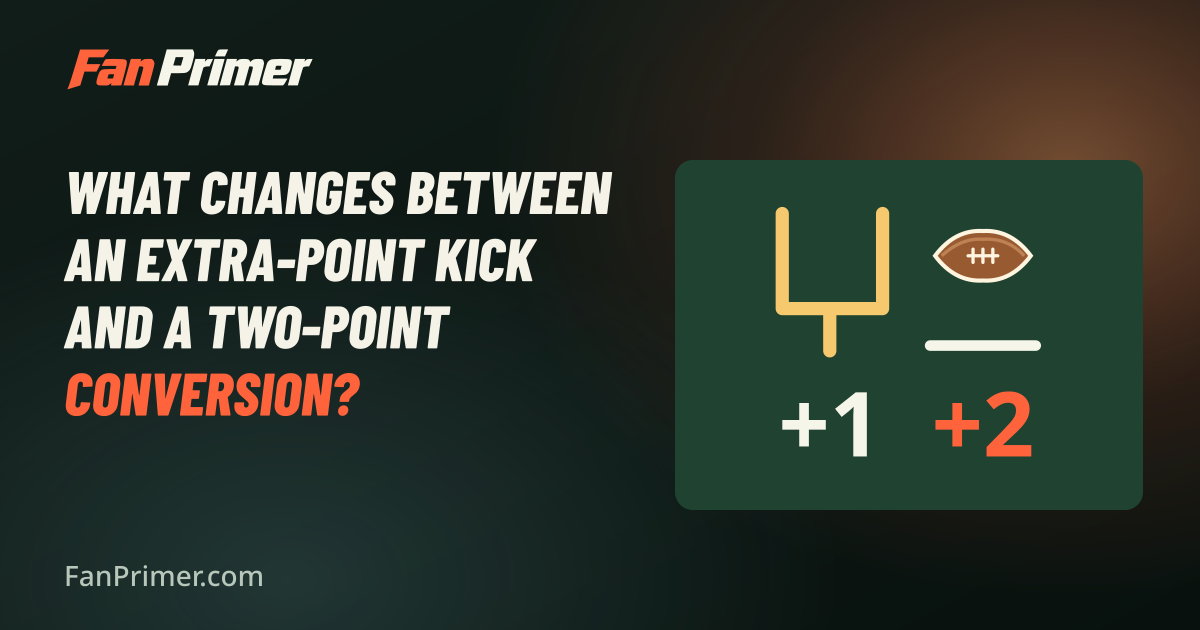
What changes between an extra-point kick and a two-point conversion?
The takeaway
A touchdown scores 6. The team then chooses a kick for 1 extra point or a run or pass for 2. Neither extra score is automatic.
See how it works
The 15-yard kick try adds 1; the 2-yard run or pass try adds 2 for a touchdown.
Kick from the 15
A successful try kick is worth 1 point; the 15 is the snap spot, not the kick distance.
Run or pass from the 2
A touchdown during the try is worth 2 points. Both pictures use the same goal line and yard scale.
One touchdown, alternative endings
The score order stays Foxes–Owls. Do not add both successful alternatives to the same touchdown.
The touchdown already counts
The extra attempt is a separate play called a try, with its own point values. The team keeps its 6 touchdown points whether or not this attempt succeeds. The game clock does not run, but the team still has a time limit to start the play.
A kick starts from the 15-yard line
Before penalties, the snap starts at the opponent’s 15, on or between the hash marks. The holder waits farther back, making the actual kick longer than 15 yards. A successful kick adds 1 point. The ball cannot sit on an artificial tee for this attempt.
A run or pass starts from the 2
Before penalties, the team starts 2 yards from the goal line. It needs the same kind of result as a touchdown: a controlled ball carried over the goal line or a completed catch in the end zone. Here that adds 2 points instead of 6. Starting closer does not remove the need to score.
Compare the choices using the same score
The Foxes have 20 and the Owls have just scored a touchdown to reach 19. A successful kick ties it 20–20. A successful 2-point play gives the Owls a 21–20 lead. A failed attempt with no defensive score leaves them behind 20–19. These are alternatives, not scores to add together.
The team can sometimes change its choice
Once the ball is ready, a charged timeout by either team or a penalty lets the offense change its choice. Penalties may move the start. A fake kick ending in a touchdown earns 2 points, not 1. The defense can also score while the attempt remains live; that is a separate outcome.
Then comes the kickoff
A score or another event making the ball dead ends the attempt. A touchback means it failed. The team that defended the try then receives the next free kick. The pictures exclude penalties, turnovers and end-of-game cases in which the extra attempt is omitted.