Clock & game format
Why is the NFL play clock sometimes 40 seconds and sometimes 25?
The takeaway
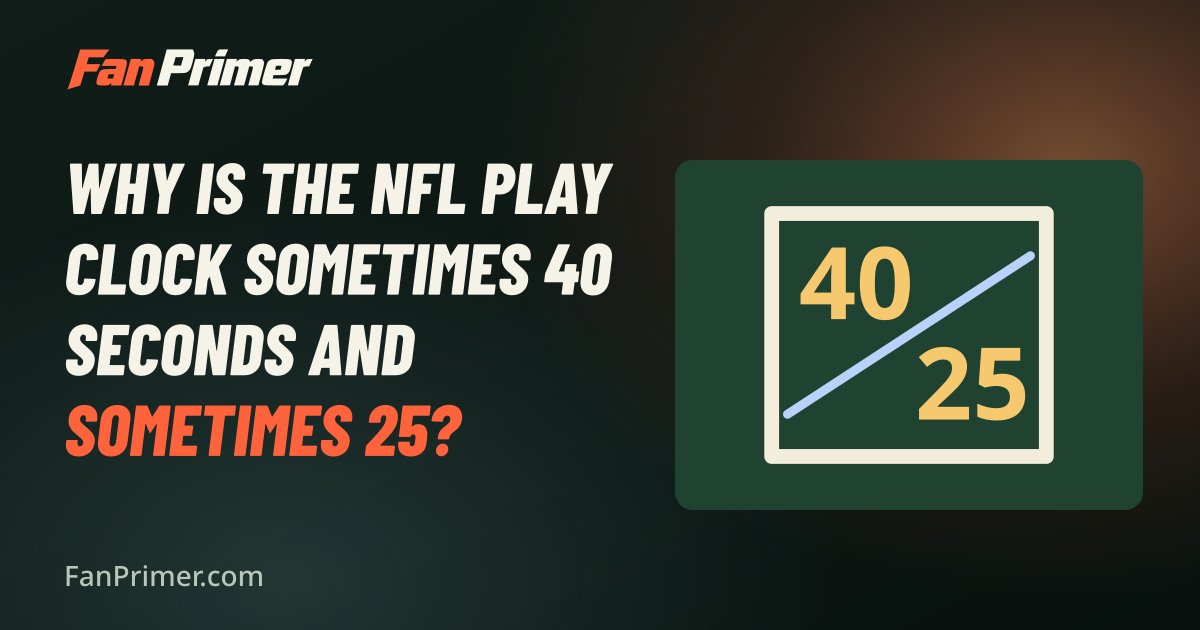
The offense normally gets 40 seconds from the end of a play to snap again. After specified stoppages, it gets 25 seconds from the referee's signal.
See how it works
After an ordinary inbounds tackle
The 40 seconds include spotting and lining up. Both clocks run in this ordinary inbounds example.
After a charged team timeout
The timeout finishes before this countdown starts. The game clock waits for the next snap.
After a possession change
The possession-change administration finishes before this countdown starts. The game clock waits for the next snap.
The ordinary 40 seconds includes lining up
The countdown begins when the previous play ends. Returning the ball and getting players into position use part of those 40 seconds. The offense does not get a fresh 40 when officials place the ball.
Some stoppages start a new 25-second count
After a possession change, team timeout, two-minute warning, quarter ending or ordinary penalty enforcement, the referee's whistle usually starts 25 seconds. The administrative break does not use those seconds. Such a stoppage can replace a 40-second count already underway.
The game clock and play clock can differ
After a tackle inside at 8:40 in the third quarter, both clocks may run. Eight seconds later they show 8:32 and 32. Compare a team timeout at 8:40: after the referee starts the 25-second count, the game clock waits for the snap. Eight seconds later the displays can read 8:40 and 17.
A new possession normally stops game time
Once a possession-changing play ends, the game clock stops. After officials finish administration, the play clock starts at 25 on the whistle. The game clock normally waits for the snap. One clock running does not prove the quarter is losing time.
Some interruptions use other amounts
Before a snap, officials ordinarily preserve the remaining play-clock time unless an exception applies. A 10-second game-clock deduction resets the play clock to 30. Certain replay reversals and defensive excess timeouts reset it to 40. For other applicable interruptions with fewer than 10 seconds left, officials can reset to 10 or retain the exact remainder.
A stopped game clock still has a snap deadline
Failing to start within the allowed play-clock interval normally brings a 5-yard delay penalty. Officials whistle and keep the ball dead. Time preserved in the quarter does not give the offense unlimited time to prepare.