Scoring & kicking
What changed when NFL goalposts moved to the back of the end zone?
The takeaway
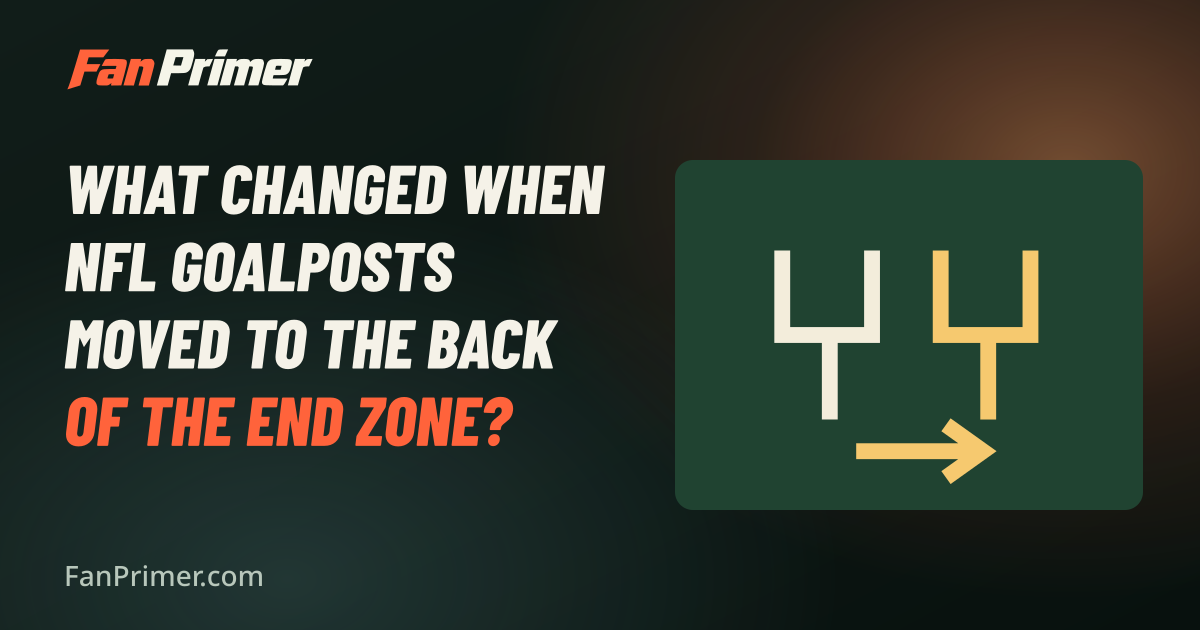
In 1974, the NFL moved the goalposts 10 yards back. Touchdowns still used the same goal line, but field goals had to travel farther.
See how it works
Same kick spot. A target 10 yards farther back.
1933–1973 placement
1974 onward
10-yard end zone · A touchdown still uses the same goal line. A field goal uses the target beyond it.
Old games can show posts on the goal line
The NFL put goalposts on the goal lines in 1933. In 1974 it moved them to the end lines, at the backs of the end zones. That explains why old footage can show posts where a runner scores, unlike the modern arrangement.
Keep the kick in place and move its target
Imagine the ball is kicked 30 yards short of the goal line. With posts on that line, the target is 30 yards away. Move them 10 yards behind it and the same kick now travels 40 yards. This comparison fixes the kick spot without assuming where a snap or holder would be.
The touchdown area did not grow
The posts moved; the end zone did not get longer. A runner still scores by reaching the goal line with possession and need not reach the posts. A field-goal kick must pass through the target at the back of the end zone.
Measure to the crossbar, not the padded support
The modern crossbar is 18 feet 6 inches wide, with its top 10 feet high. It lies in the plane of the end line. The supporting structure sits behind that line, so its padded base is not the point to use when measuring kick distance.