Scoring & kicking
Why can the ball look across the goal line from one camera angle and short from another?
The takeaway
A ball held above the ground can look over the painted goal line while still being short. Camera angle can hide the ball’s true position.
See how it works
One ball, two sightlines
Looking through an elevated object continues to a ground point farther along the sightline.
Move the camera, keep the ball fixed
The apparent overlap changes. The ball has not moved across the plane.
Locate the ball in space
A view that resolves the ball against the vertical plane answers a different question from ground-line overlap.
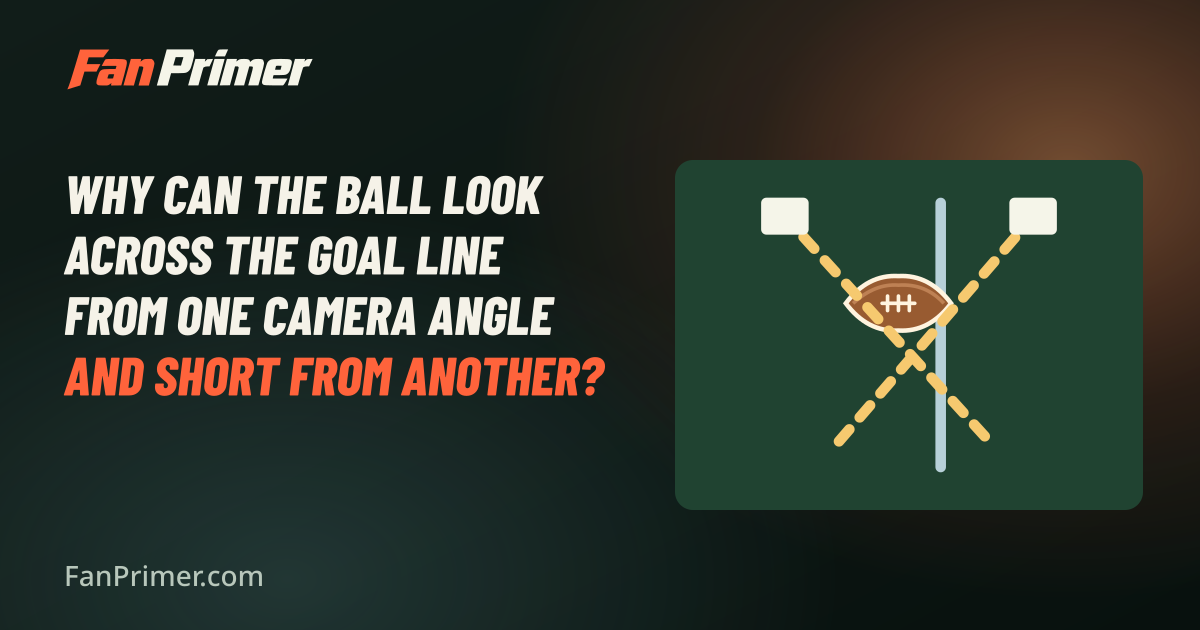
Gold dashed ray: camera → football → apparent ground overlap. Blue dashed line: true position beneath the football. Side sections are schematic pinhole-camera geometry.
Imagine the goal line rising like a wall
A runner still in play scores when the ball he controls reaches the vertical plane above the opponent’s goal line. The ball can reach it in the air. Its shadow, the runner’s helmet and where his feet land do not locate the front of the ball.
A camera puts near and far objects into one flat picture
Look through a camera toward a ball held above the grass. Extend that sightline down to the ground. It may reach grass beyond the goal line even though the elevated ball is still short of the scoring plane. Moving the camera changes that apparent overlap.
The ball stays still while the view changes
Here the ball’s front tip is always 0.1 yard short. Both the camera and ball are above the ground. Looking from one side puts the sightline’s ground point in the end zone; the other puts it in the field. Neither view moves the ball. The overhead check shows its actual position separately.
Replay needs to establish the real position
Locate the football relative to the vertical scoring plane, then check control and whether play had ended. An angled camera can supply useful evidence. But overlap with the painted grass line alone may leave height or depth uncertain. NFL replay needs clear and obvious video evidence to change a call.
Position alone does not settle every touchdown
A real play also involves when possession began, whether the runner was down or out, and any pylon rule. The picture isolates camera perspective. A loose ball drifting across the goal line does not itself score a touchdown.