Scoring & kicking
Why might a punter aim toward the sideline?
The takeaway
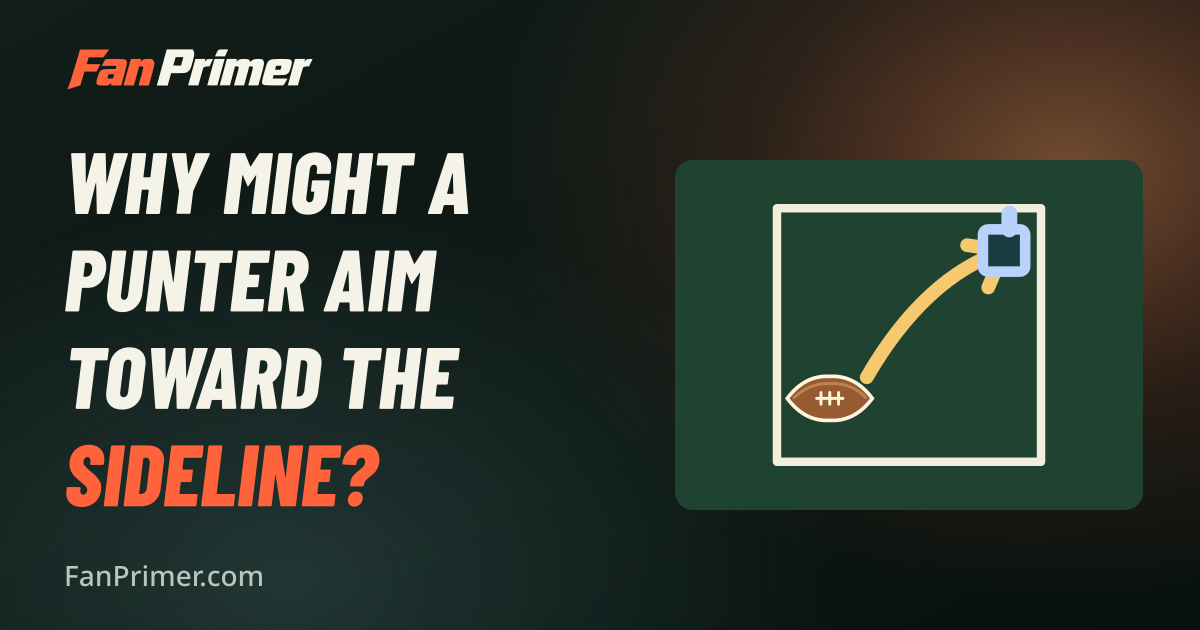
A punter can aim near a sideline to leave the returner less room. The chasing teammates must cover the same area for that plan to work.
See how it works
The sideline narrows one side. Coverage must still control a path back toward the middle.
Central catch
Return space extends to both sides.
Directional catch
Less space outside; the inside path still matters.
Cream circles: punt coverage · Blue square: returner · Shading: space toward the boundaries · White leader: ball position
Central catch
Same catch depth and airtime.
Directional catch
Same catch depth and airtime.
Central catch
Same catch depth and airtime.
Directional catch
Same catch depth and airtime.
Central catch
Return space extends to both sides.
Directional catch
Less space outside; the inside path still matters.
Central catch
Return space extends to both sides.
Directional catch
Less space outside; the inside path still matters.
A sideline removes one escape route
Catch near the middle and a returner has room on both sides. Catch near a sideline and there is much less room on that side. The boundary cannot tackle him, but he cannot keep gaining yards outside it.
The chasing players have to match the kick
In the sideline example, coverage players head toward the intended landing area while protecting the route back inside. Knowing where the ball should arrive helps them approach together. A fast outside player who runs past the catch may still leave a path open.
Aiming wider can cost distance
The pictures hold the depth and time in the air the same to compare placement. Real kicks can change both when aimed wider. A kick out of bounds prevents a return, but going out too early can give away yards the punter wanted.
The returner can still escape
A misplaced kick may land away from the chasing players. A returner who gets back inside may find open space. Look at both the ball and the approach of the coverage team. A kick aimed wide needs coordinated help.